
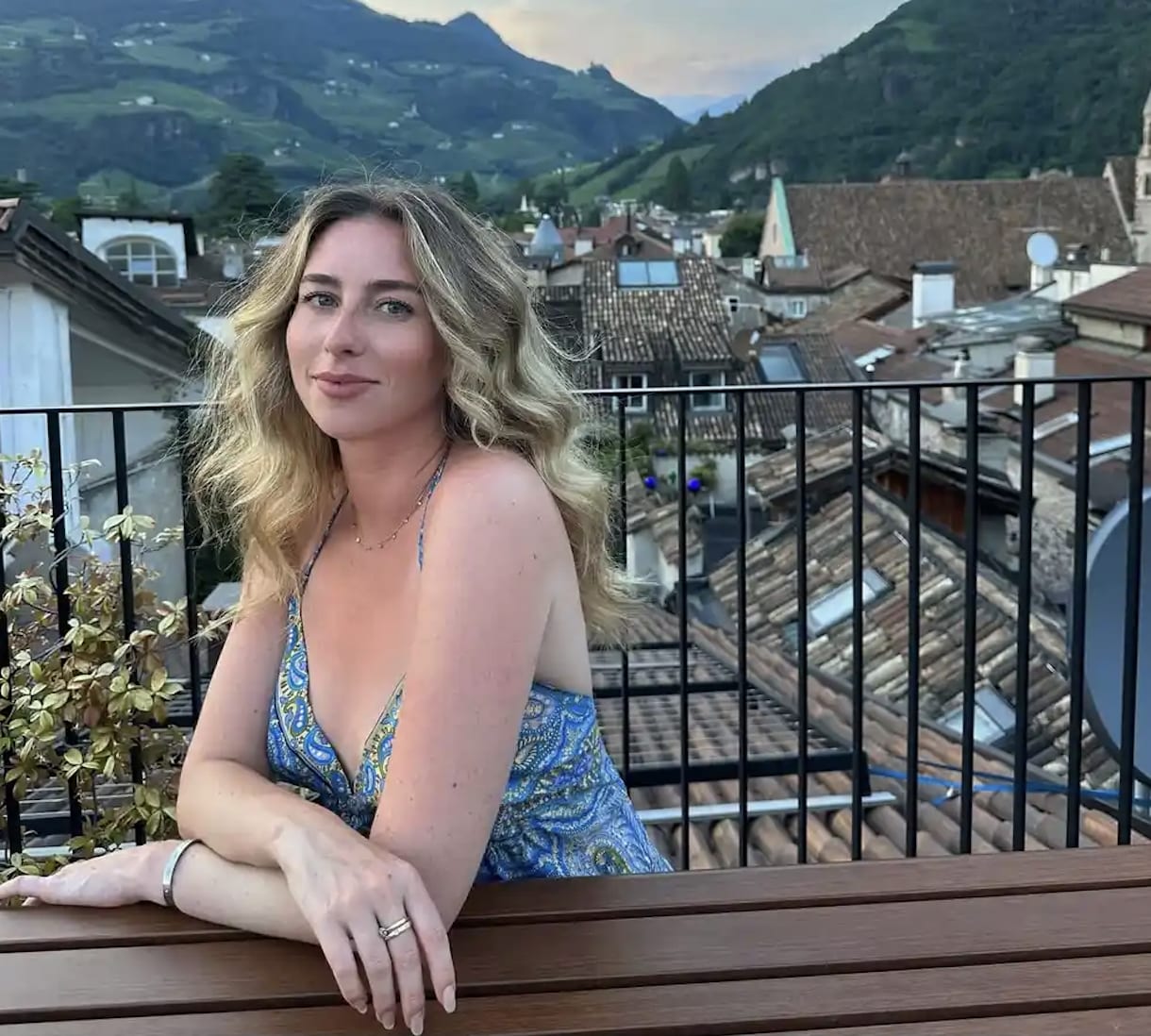
A viral video, a house in Mussomeli and the €27,000 Sicilian dream: beautiful, yes. True, perhaps. Simple, no.
Un video virale, una casa a Mussomeli e il sogno siciliano da 27.000 euro: bellissimo, sì. Veritiero, forse. Semplice, no.
La storia di Kiki Leigh raccontata da Business Insider è vera, affascinante e perfino incoraggiante. Ma proprio perché vale la pena prenderla sul serio, merita anche una dose di realtà: quella dei costi veri, dei tempi veri e di tutto ciò che i social raccontano sempre dopo, quando ormai hai già sognato.
La storia ci piace, e sarebbe sciocco fingere il contrario. Una giovane donna che vive a Los Angeles, vede un video, prende un aereo, arriva in Sicilia, si innamora di Mussomeli, compra una casa grande, antica, piena di potenziale, e decide di riscrivere la propria idea di futuro. È una storia contemporanea, potente, quasi cinematografica. Non perché sia perfetta, ma perché intercetta qualcosa che molti sentono davvero: la stanchezza per vite troppo costose, troppo veloci, troppo costruite attorno a ritmi che non hanno più nulla di umano. In questo senso, il racconto di Kiki Leigh non è affatto finto. È anzi credibile proprio perché contiene un nucleo reale che chi conosce certi territori riconosce subito: la forza delle relazioni, il senso di comunità, il fatto che in certi paesi del Sud Italia tu esista come persona prima ancora che come professione, status o “network opportunity”. Questo, per chi arriva da grandi metropoli iperfunzionali e spesso ipersuperficiali, ha un impatto fortissimo.
Ed è giusto dirlo con chiarezza: Mussomeli qualcosa l’ha fatto davvero. Non è uno di quei casi costruiti solo per il titolo ad effetto o per l’ennesima fotogallery internazionale sulle “case a un euro” che si ferma all’immagine del balcone storto e della persiana verde. Mussomeli ha attirato stranieri, ha riportato attenzione internazionale, ha creato movimento, ha rimesso in circolo interesse su un centro storico che altrimenti sarebbe rimasto ancora più invisibile. Il suo programma sulle case a un euro è tra i più noti e strutturati d’Italia, con obblighi precisi per chi compra, inclusa una garanzia di 5.000 euro e tempistiche formali per progetto, rogito e avvio dei lavori. Molte le case ‘sul mercato’ a prezzi bassissimi e negoziabili.
Il punto, però, è un altro. Il problema non è la storia. Il problema è il modo in cui queste storie vengono assorbite da chi legge. Perché lette nel feed, tra un reel motivazionale e un video con una terrazza rifatta bene, rischiano di diventare una formula. E invece formula non sono. Sono eccezioni possibili, esperienze vere, ma immerse in condizioni molto più dure e molto più articolate di quanto la narrativa internazionale lasci intendere.
Noi questa cosa la diciamo con un po’ di cognizione di causa, non per il gusto di smontare il sogno altrui, ma perché a Mussomeli ci lavoriamo da anni. In cinque anni abbiamo seguito circa quindici operazioni per altrettante famiglie, e continuiamo ad avere una pipeline importante, con una decina di immobili e oltre ancora in lavorazione o in valutazione. Quindi sì, quando leggiamo una storia come questa siamo contenti di riprenderla, perché conferma che il fascino del luogo è reale. Ma proprio per questo sappiamo anche cosa succede dopo il momento dell’entusiasmo. E i conti, come sempre, si fanno alla fine.
L’equivoco da correggere non è sull’acquisto iniziale. Quello, in molti casi, è vero. A Mussomeli puoi comprare con 5.000, 10.000, 15.000, 20.000 euro. Puoi anche trovare occasioni che, viste da Los Angeles, Londra o Toronto, sembrano quasi irreali. Ma l’acquisto è la parte più facile da raccontare e la meno significativa da isolare. Perché dal giorno dopo iniziano a sommarsi il notaio, l’architetto, i rilievi, le pratiche, gli eventuali adeguamenti catastali, i tecnici, gli impiantisti, le verifiche strutturali, gli imprevisti. E solo per iniziare a muoversi in modo serio, difficilmente stai sotto qualche migliaio di euro aggiuntivi. Se poi qualcuno immagina di rifare case enormi, spesso distribuite su più livelli, con impianti vecchi o assenti, strutture complesse, accessi multipli, umidità, murature da verificare, e pensa davvero di chiudere tutto con cifre da racconto social, allora non sta facendo un progetto: sta facendo un atto di fede.
Il punto non è dire che 90.000 euro siano impossibili in assoluto. Il punto è dire che non sono un parametro trasferibile come se fosse la regola. Se una persona fa da sé una parte rilevante del lavoro, se ha moltissimo tempo, se riesce a stare sul posto a lungo, se accetta ritmi non lineari, se ha una soglia alta di adattamento, se è brava a tollerare ritardi, se sa prendere decisioni in un contesto che non controlla completamente, allora sì, forse un certo tipo di contenimento dei costi può anche diventare credibile. Ma già questo “forse” dovrebbe bastare per mettere in guardia chi legge troppo in fretta. Perché sotto i 500 euro al metro quadro, su immobili che nella maggior parte dei casi sono messi male o malissimo, non siamo nel campo dell’efficienza straordinaria: siamo spesso nel campo dell’ottimismo narrativo. E quando si parla di case antiche nei centri storici, l’ottimismo è la voce di spesa più pericolosa di tutte.
Poi c’è un’altra grande omissione che nelle storie internazionali ritorna quasi sempre: il costo dell’attesa. Perché mentre la casa viene sistemata, tu dove vivi? Questo è il passaggio che separa la fantasia dall’esperienza concreta. Se arrivi, compri e poi devi aspettare uno o due anni prima di avere una casa realmente abitabile, certificata, funzionale, con impianti a norma, bagno, cucina, accessi, utenze e agibilità gestibili, nel frattempo non vivi per aria. E a Mussomeli, come in molti contesti simili, l’affitto tradizionale per uno straniero in transizione non è affatto automatico, né sempre disponibile nelle forme e nei tempi che servono. Molto spesso finisci per stare in B&B o in soluzioni temporanee. E quelle, nel tempo, pesano. Tra soggiorni, ritorni, viaggi, settimane in attesa, imprevisti di calendario e costi di permanenza, due anni di gestione “ponte” possono tranquillamente mangiarsi una cifra importante. È un costo reale, ma invisibile nel titolo dell’articolo. Eppure incide eccome sulla sostenibilità del progetto.
Lo stesso vale per il celebre confronto con Los Angeles, che in termini giornalistici funziona benissimo e in termini pratici regge molto meno. Dire che una casa a Mussomeli costa meno di un anno di affitto a LA è una frase efficace, memorabile, perfetta per attirare clic e condivisioni. Ma non è un confronto omogeneo. Perché non stai paragonando solo due prezzi: stai paragonando due ecosistemi di vita completamente diversi. A Los Angeles paghi moltissimo, certo, ma sei dentro una metropoli globale con un certo tipo di mobilità, servizi, densità di opportunità, reti professionali e disponibilità di mercato. A Mussomeli hai altre cose, che possono essere più preziose per chi le cerca, ma non puoi far finta che il confronto sia lineare. Muoversi è diverso, i tempi sono diversi, l’accesso è diverso, l’inverno è diverso, il rapporto con la distanza è diverso. Mussomeli è nell’entroterra, a circa 765 metri sul livello del mare, e il suo clima non è quello della Sicilia-cartolina che molti stranieri immaginano in automatico quando sentono nominare l’isola.
Questo significa che non ne vale la pena? No. Ed è proprio qui che il debunking deve restare onesto. Perché la risposta seria è: può valerne eccome la pena. Per alcune persone, moltissimo. Però bisogna sapere per chi. Una storia come quella di Kiki Leigh parla naturalmente a un certo profilo: persone giovani, molto flessibili, con una forte spinta all’avventura, magari in una fase della vita in cui l’instabilità è ancora leggibile come possibilità e non come rischio. È un profilo legittimo, anzi spesso coraggioso. Ma non è l’unico. E soprattutto non è il profilo medio di chi, a trenta, quarant’anni o cinquanta, lavora da remoto, ha scadenze, responsabilità, magari figli, impegni economici, una routine professionale da difendere e nessuna intenzione di trasformare ogni settimana in una caccia all’artigiano, al tecnico, al documento, alla risposta che arriva non quando serve a te, ma quando si allineano tutte le condizioni del posto.
È qui che, per come lavoriamo noi, cambia completamente il senso del progetto. Perché quello che proponiamo non è la negazione di quell’esperienza, ma la sua traduzione in qualcosa di più sostenibile per una platea più ampia. La stessa promessa di fondo, se vogliamo: vivere davvero un borgo, non limitarsi a comprarlo in fotografia. Solo che invece di partire da un video virale e da un innamoramento che poi chiede al proprietario di arrangiarsi su tutto il resto, si parte da un accompagnamento reale, da un affitto temporaneo ragionato, da costi realistici, da una gestione che riduca il caos per chi non può permettersi che il proprio trasferimento diventi un secondo lavoro a tempo pieno. Per una ragazza giovane, forte, energica e disponibile ad assorbire anche una certa dose di romantic fatigue, può essere una bellissima avventura. Per altri può diventare una fonte di frustrazione enorme, non perché il luogo deluda, ma perché deludono le aspettative costruite male in partenza.
Il punto, allora, non è opporre la “nostra” realtà al “suo” racconto. Il punto è riconoscere che il racconto è vero ma selettivo. È vero il fascino di Mussomeli. È vera la comunità. È vero che il paese, rispetto a molti altri, ha portato un’enorme quantità di attenzione internazionale e ha saputo intercettare un desiderio contemporaneo fortissimo di vita meno standardizzata. È vero anche che alcune persone, con il giusto mix di energia, tempo, intuito e tolleranza agli imprevisti, riescono a fare cose che sulla carta sembrerebbero folli. Ma è altrettanto vero che la parte mielosa di queste storie spesso arriva molto prima della contabilità finale, molto prima della stanchezza, molto prima del conto vero dei mesi di attesa, dei ritorni, delle scelte sbagliate, delle lavorazioni rifatte, delle pratiche che slittano, degli errori di valutazione e del momento in cui ti accorgi che comprare a poco non significa affatto vivere a poco.
Ed è proprio per questo che vale la pena raccontarle meglio, non meno. Non per smontarle, ma per far sì che continuino ad attirare persone nel modo giusto. Perché se uno arriva preparato, con aspettative corrette, con un progetto adatto al proprio profilo e con una rete seria attorno, allora sì, Mussomeli può essere una grande storia. Ma se arriva dopo aver letto solo la versione più dolce, più instagrammabile e più esportabile del sogno siciliano, il rischio non è che scopra la verità: il rischio è che la scambi per una delusione. E sarebbe un peccato, perché la verità, in questi luoghi, non è meno interessante della fantasia. È solo più impegnativa.
A viral video, a house in Mussomeli and the €27,000 Sicilian dream: beautiful, yes. True, perhaps. Simple, no.
The story of Kiki Leigh, as told by Business Insider, is real, fascinating and even encouraging. But precisely because it is worth taking seriously, it also deserves a degree of realism: the kind made of actual costs, real timelines and everything that social media tends to show only later, when you have already started to dream.
We like this story, and it would be pointless to pretend otherwise. A young woman living in Los Angeles sees a video, gets on a plane, arrives in Sicily, falls in love with Mussomeli, buys a large, old house full of potential and decides to rewrite what she thought her life would look like. It is a contemporary story, powerful, almost cinematic. Not because it is perfect, but because it intercepts something that many people genuinely feel: a growing fatigue with lives that are too expensive, too fast and too structured around rhythms that no longer feel human. In this sense, Kiki Leigh’s story is not false at all. If anything, it is credible precisely because it contains a very real core that anyone familiar with certain places immediately recognises: the strength of relationships, the sense of community, the fact that in certain small towns in Southern Italy you exist as a person before anything else, not as a job title, a status or a networking opportunity. For someone arriving from a global city, this can have a very strong impact.
And this needs to be said clearly: Mussomeli has actually managed to achieve something. This is not one of those cases built only for headlines or yet another international piece on “one-euro homes” that stops at the image of a crooked balcony and a green shutter. Mussomeli has attracted foreigners, has brought international attention and has created movement in a historic centre that otherwise would have remained even more invisible. It has created a real community, one that exists even outside the summer season. This is not insignificant.
The point, however, is another. The problem is not the story. The problem is how these stories are absorbed by those who read them. Because when they are consumed within a feed, between a motivational reel and a perfectly renovated terrace, they risk becoming a formula. And they are not a formula. They are possible experiences, real ones, but embedded in conditions that are far more complex and demanding than the international narrative tends to suggest.
We say this with a certain degree of awareness, not because we want to dismantle someone else’s dream, but because we have been operating in Mussomeli for years. Over the last five years we have followed around fifteen transactions for as many families, and we still have a pipeline of roughly ten to twelve properties in different stages of development. So yes, when we read a story like this we are genuinely pleased to revisit it, because it confirms that the appeal of the place is real. But precisely for this reason, we also know what happens after the initial enthusiasm. And as always, the numbers only make sense at the end.
The misunderstanding is not about the initial purchase. That part is, in many cases, true. In Mussomeli you can buy for five, ten, fifteen or twenty thousand euros. You can find opportunities that, when seen from Los Angeles, London or Toronto, seem almost unreal. But the purchase is the easiest part to tell and the least meaningful if taken on its own. Because from the very next day, costs begin to accumulate: the notary, the architect, surveys, paperwork, possible cadastral adjustments, technicians, contractors, structural checks and unexpected issues. And just to begin moving in a serious way, it is very difficult to stay below several thousand euros in additional costs. If someone imagines renovating very large houses, often spread across multiple levels, with outdated or non-existent systems and complex structures, and truly believes that everything can be completed with figures seen in social media narratives, then that is not a project. That is an act of faith.
The point is not to say that ninety thousand euros are impossible in absolute terms. The point is that they are not a transferable benchmark. If someone carries out a significant part of the work themselves, has a great deal of time, can stay locally for long periods, accepts non-linear timelines, has a high tolerance for delays and is able to make decisions in a context that they do not fully control, then yes, perhaps a certain level of cost containment can be achieved. But even this “perhaps” should be enough to create a degree of caution for anyone reading too quickly. Because below five hundred euros per square metre, for houses that in most cases are in very poor condition, we are no longer in the field of efficiency. We are in the field of narrative optimism. And when dealing with historic properties, optimism is often the most dangerous cost of all.
Then there is another major omission that tends to appear in almost all international stories: the cost of waiting. Because while the house is being renovated, where do you actually live? This is the point that separates imagination from reality. If you arrive, buy and then need to wait one or two years before having a house that is truly habitable, certified, functional, with compliant systems, working utilities and proper access, you are not living in mid-air in the meantime. And in Mussomeli, as in many similar contexts, traditional rentals for foreigners in transition are not always available or straightforward. Very often, the only realistic option is short-term accommodation. And that comes at a cost. Over time, between stays, returns, travel and delays, two years of temporary living can easily amount to a significant figure. It is a real cost, but an invisible one in the headline. And yet it has a very real impact on the overall sustainability of the project.
The same applies to the comparison with Los Angeles, which works perfectly at a narrative level but much less so in practical terms. Saying that a house in Mussomeli costs less than a year of rent in LA is an effective and memorable statement, ideal for attracting attention. But it is not a balanced comparison. Because you are not simply comparing two prices, you are comparing two completely different life ecosystems. In Los Angeles, you pay a great deal, but you are inside a global metropolitan system with a certain type of mobility, services, opportunities and accessibility. In Mussomeli, you have something else, which may be more valuable for some people, but you cannot pretend that the comparison is linear. Moving around is different, timing is different, access is different, and winter is different. Mussomeli is inland, and its climate is not the postcard version of Sicily that many people automatically imagine.
Does this mean it is not worth it? No. And this is where the debunking needs to remain honest. Because the correct answer is that it can absolutely be worth it, for some people very much so. But it is essential to understand for whom. A story like Kiki Leigh’s naturally speaks to a specific profile: people who are young, highly flexible, adventurous and often somewhat outside conventional paths. For them, this can be an extraordinary experience. For others, particularly those in their thirties, forties or fifties, who have remote work to maintain, responsibilities to manage and limited time available, it can quickly become an operational challenge. Not because the place disappoints, but because expectations were not set correctly at the beginning.
This is where, in our approach, the entire logic of the project changes. What we propose is not different in its outcome, but in its process. The same experience in principle: living in a small town, restoring a property, integrating into a community. But starting from a more structured foundation, with temporary housing planned realistically, with full project management, with timelines and costs that are grounded in reality and with less reliance on improvisation. Because what, for someone young and energetic, can be an exciting adventure, for someone else can become a full-time logistical burden.
The point, then, is not to oppose our reality to her story. The point is to recognise that the story is true, but selective. The appeal of Mussomeli is real. The community is real. The fact that the town has attracted significant international attention and has tapped into a strong contemporary desire for a different kind of life is also real. But it is equally true that the softer, more appealing side of these stories often arrives well before the final accounting, well before the fatigue, well before the real cost of waiting, of returning, of mistakes, of delays and of decisions that turn out to be more complex than expected. Buying cheaply does not mean living cheaply.
And this is precisely why these stories deserve to be told better, not less. Not to dismantle them, but to allow them to continue attracting people in the right way. Because if someone arrives prepared, with realistic expectations, with a project suited to their profile and with proper support, then yes, Mussomeli can be a great story. But if they arrive having absorbed only the softer, more polished version of the Sicilian dream, the risk is not that they discover reality, but that they misinterpret it as disappointment. And that would be a pity, because the reality, in places like this, is no less interesting than the dream. It is simply more demanding.


