Some stories work because they contain one irresistible detail. In this case, that detail is the €200 figure mentioned by Fodor’s to book the ghost village of Celleno as the setting for a wedding. It is the sort of number that immediately makes people stop scrolling, especially in a country where even organising a dinner with friends can now feel like a minor infrastructure project. Of course, it should be treated with the necessary caution: this is a figure reported by an international travel publication and republished by We the Italians, not a full municipal price list including conditions, services, permits, availability and every practical detail. Still, it is a powerful hook, because it draws attention to a place that deserves a closer look.
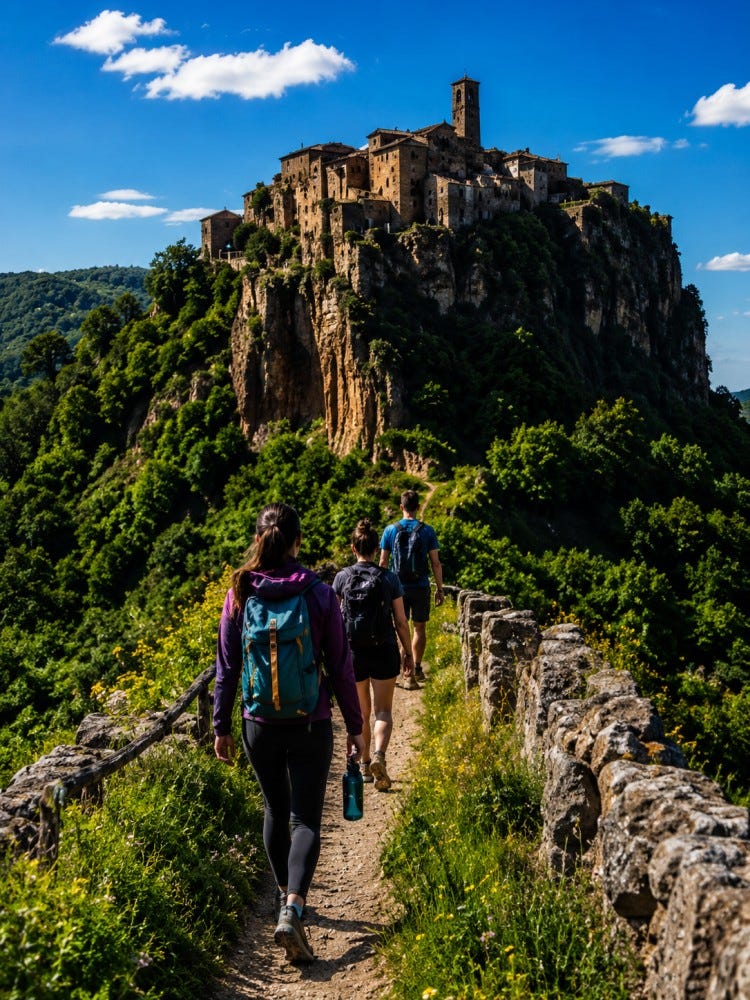
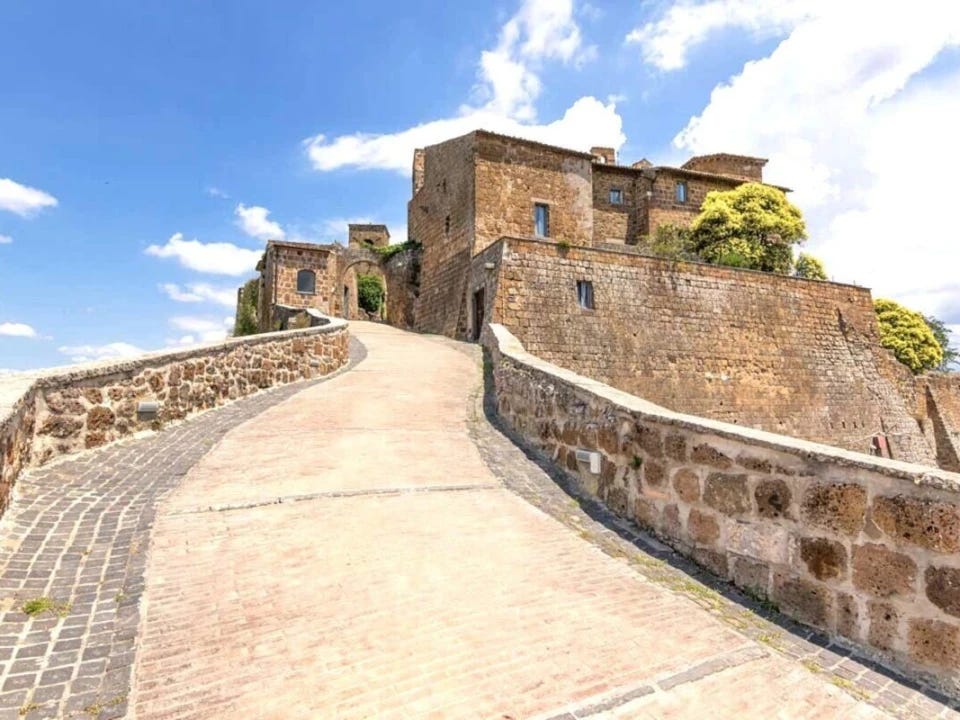
Celleno, in the Tuscia area of northern Lazio, is known as the Borgo Fantasma, the Ghost Village. It is a suspended place of tufa-stone houses, silent lanes, dramatic gullies, panoramic views and rural memory. It sits in the province of Viterbo, not far from Civita di Bagnoregio, and the tourist material describes it as a place to be experienced slowly, where every stone seems to hold a story and every view opens onto one of the most striking landscapes of central Italy.
Yet the interesting point is not simply that Celleno is beautiful. Italy has many beautiful villages, perhaps even too many to describe them all without falling into the usual brochure language. What makes Celleno more interesting is that it appears to be attempting something more complex: not erasing abandonment, not pretending that the past can return intact, not turning ruins into empty scenery, but giving a contemporary function to a place that has lost its original one.
The official tourist website of the Borgo Fantasma moves precisely in this direction. It is not merely an emotional showcase, but a practical tool for visitors, presenting history, activities, trekking, food and wine, weddings, film locations, team building and direct contacts. It also presents Celleno as a place for civil and religious weddings in a setting described as unique, exclusive and dedicated.
This practical approach is reinforced by the opening of the tourist infopoint in the old village, with the single number 338 7197681 for information, guided tour bookings, museum opening times and local services. Local reporting presents the infopoint as a central service for organising the tourist offer of the Ghost Village, aimed not only at individual visitors but also at schools, associations and tour operators.
And this is where the story becomes much more interesting than the headline about a €200 wedding. A ghost village, if it remains only “ghostly”, risks becoming an aesthetic object: beautiful to photograph, easy to romanticise, convenient to package, but ultimately detached from the living community around it. If, instead, that village becomes a place for guided visits, cultural events, museums, education, walks and even weddings, then it is not simply coming back to life as it once was. It is serving the present in another way.
This may be one of the most useful lessons for many Italian places suspended between abandonment and memory. Not every abandoned village can return to being inhabited as it once was, and perhaps not every village should try to do so. In some cases, the economic, demographic, structural or logistical conditions are simply no longer there. In others, the danger is to create a small fiction for visitors, with a few vintage signs, a few wrought-iron tables and a story more convincing than the reality behind it. Celleno, at least for now, seems to suggest a different route: accepting its condition as an abandoned village without being crushed by it.
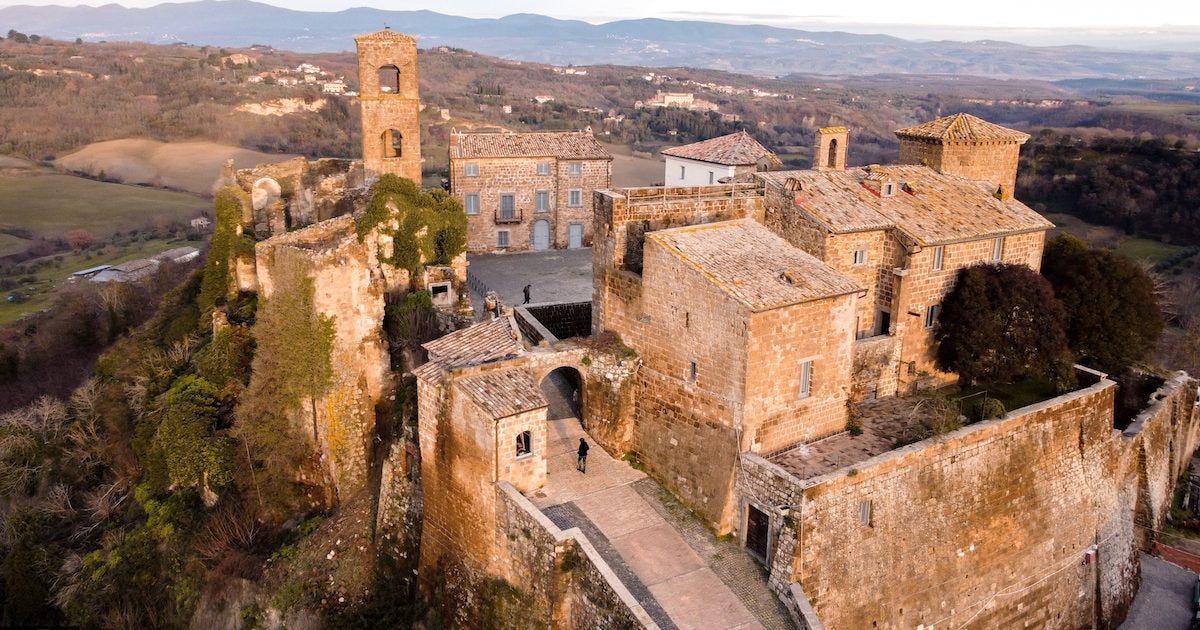
The Orsini Castle, the Museum of Archaic Maiolica, the medieval butto, the churches, the historic ruins, the panoramic routes and the memory of the population’s transfer to the new Celleno form a layered story, not just a picturesque one. There is also the important connection with Enrico Castellani, who bought and restored the Rocca Orsini and remains one of the key figures in the cultural revival of the village.
Another sign of direction is the €75,000 funding obtained by the Municipality of Celleno for “Celleno Immersiva”, a project dedicated to digital technologies, virtual reality, 360-degree filming, digital reconstructions, multimedia content and an avatar guide designed to make the village and its museums more accessible and engaging. Here too, the point is not to replace the real village with a digital version, but to use contemporary tools to make a fragile heritage easier to understand and experience.
Of course, caution is needed. The regeneration of Italian villages is a slippery field, full of good intentions, easy slogans and occasional illusions. The risk of turning every fragile place into a “location” is real. The risk of using the word “authenticity” until it becomes meaningless is real. The risk of creating tourism without meaningful local benefit is real. Yet Celleno deserves attention because it seems to ask the right question: not how do we bring everything back to what it once was, but how do we give meaning, use and future to what has remained?
In the end, the €200 figure is the narrative hook. The real story is different: a ghost village does not have to be dead. It may not return to being a village in the traditional sense, but it can become a place of culture, memory, events, visits, education, light economic activity and local identity. It can continue to serve its community even after losing the function for which it was originally built.
Perhaps this is what makes Celleno so interesting. It does not promise to erase abandonment, but tries to turn it into story, experience and possibility. It does not pretend that time has not passed, but uses that passage of time as part of its value. It does not go back. More realistically, it looks for a way forward.
Have you been there? Would you visit it, or even get married in a ghost village? And more broadly: should these places try to become what they once were, or can they have a different future, more fragile perhaps, but also more honest?
Celleno, il borgo fantasma che non vuole essere morto
Secondo Fodor’s, ripreso da We the Italians, il Borgo Fantasma di Celleno può essere prenotato per un matrimonio a partire da 200 euro: ma la vera notizia non è il prezzo, è il tentativo di dare una nuova funzione a un luogo abbandonato.
Ci sono notizie che funzionano perché hanno dentro un dettaglio irresistibile. In questo caso, il dettaglio sono quei 200 euro citati da Fodor’s per prenotare il borgo fantasma di Celleno come scenario di un matrimonio. Una cifra talmente bassa da sembrare quasi una provocazione, soprattutto in un Paese dove anche una cena con qualche amico può ormai richiedere un piccolo piano industriale. Naturalmente, va presa per ciò che è: una cifra riportata da una testata internazionale e rilanciata da We the Italians, non un tariffario comunale da considerare automaticamente definitivo, completo di servizi, condizioni, permessi e disponibilità. Però quel dettaglio funziona, perché costringe a guardare Celleno con più attenzione.
Celleno, nella Tuscia viterbese, è conosciuto come il Borgo Fantasma. È un luogo sospeso, fatto di case in tufo, vicoli silenziosi, calanchi, scorci panoramici e memoria rurale. Si trova nel Lazio settentrionale, non lontano da Viterbo e da Civita di Bagnoregio, e il materiale turistico del borgo lo racconta come un luogo da attraversare lentamente, dove ogni pietra conserva una storia e ogni scorcio apre su uno dei paesaggi più suggestivi dell’Italia centrale.
Ma il punto interessante non è soltanto la bellezza del posto. Di borghi belli, in Italia, ne abbiamo tanti, forse persino troppi per riuscire a raccontarli tutti senza cadere nella solita lingua da brochure. Il punto è che Celleno sembra provare a fare una cosa più complessa: non cancellare l’abbandono, non fingere che il passato possa tornare intatto, non trasformare la rovina in scenografia vuota, ma trovare una funzione contemporanea per un luogo che ha perso quella originaria.
Il nuovo sito turistico ufficiale del Borgo Fantasma va proprio in questa direzione. Non è solo una vetrina emozionale, ma uno strumento pratico per orientare il visitatore tra storia, attività, trekking, food & wine, matrimoni, location per film, team building e contatti. Il sito presenta anche Celleno come luogo per matrimoni civili o religiosi, in una location definita unica, esclusiva e dedicata.
A rafforzare questa impostazione c’è anche l’attivazione dell’infopoint turistico nel borgo vecchio, con il numero unico 338 7197681 per informazioni, prenotazioni delle visite guidate, orari e servizi del sistema museale locale. La notizia, riportata anche dalla stampa locale, presenta l’infopoint come un centro per organizzare l’offerta turistica del Borgo Fantasma, rivolto a visitatori individuali, scuole, associazioni e tour operator.
Ed è qui che la storia diventa più interessante della battuta sul matrimonio da 200 euro. Perché un borgo fantasma, se resta solo “fantasma”, rischia di diventare un oggetto estetico: bello da fotografare, facile da raccontare, comodo da romanticizzare, ma in fondo separato dalla vita concreta della comunità che gli sta intorno. Se invece quel borgo diventa luogo di visite, eventi, cultura, museo diffuso, didattica, escursioni e anche matrimoni, allora non torna semplicemente in vita come prima, ma comincia a servire il presente in un altro modo.
Questa è forse una delle lezioni più utili per tanti luoghi italiani sospesi tra abbandono e memoria. Non tutti i borghi possono tornare a essere abitati come un tempo, e forse non tutti devono farlo. In alcuni casi mancano le condizioni economiche, demografiche, logistiche o strutturali; in altri casi, il rischio è costruire una piccola finzione per turisti, con due insegne vintage, tre tavolini in ferro battuto e una narrazione più forte della realtà. Celleno, almeno per ora, sembra suggerire una strada diversa: accettare la propria condizione di borgo abbandonato, ma non farsene schiacciare.
Il Castello Orsini, il Museo delle Maioliche Arcaiche, il butto medievale, le chiese, i ruderi storici, i percorsi panoramici e la memoria del trasferimento della popolazione verso la nuova Celleno compongono una storia stratificata, non semplicemente pittoresca. A questo si aggiunge il legame con Enrico Castellani, che acquistò e restaurò la Rocca Orsini e che rappresenta una delle figure più importanti della rinascita culturale del borgo.
C’è poi un ulteriore segnale di direzione: il Comune di Celleno ha ottenuto un finanziamento di 75.000 euro per “Celleno Immersiva”, un progetto dedicato all’uso di tecnologie digitali, realtà virtuale, riprese a 360 gradi, ricostruzioni digitali, contenuti multimediali e un avatar-guida per raccontare il borgo e i suoi musei in modo più accessibile e coinvolgente. Anche qui, la questione non è sostituire il borgo reale con una versione digitale, ma usare strumenti contemporanei per rendere più leggibile un patrimonio fragile.
Naturalmente, bisogna restare prudenti. La valorizzazione dei borghi italiani è un terreno scivoloso, pieno di ottime intenzioni, slogan facili e qualche illusione. Il rischio di trasformare ogni luogo fragile in “location” esiste. Il rischio di usare la parola “autenticità” fino a svuotarla completamente esiste. Il rischio di fare turismo senza generare vero beneficio locale esiste. Però Celleno merita attenzione proprio perché sembra porre la domanda giusta: non come riportiamo tutto a com’era prima, ma come facciamo a dare senso, uso e futuro a ciò che è rimasto.
In fondo, i 200 euro sono il gancio narrativo. La notizia vera è un’altra: un borgo fantasma può non essere morto. Può non tornare a essere paese nel senso tradizionale, ma può diventare luogo di cultura, memoria, eventi, visita, educazione, economia leggera e identità territoriale. Può continuare a servire la propria comunità anche dopo avere perso la funzione per cui era nato.
E forse è proprio questa la cosa più interessante di Celleno. Non promette di cancellare l’abbandono, ma prova a trasformarlo in racconto, esperienza e possibilità. Non finge che il tempo non sia passato, ma prova a usare quel tempo come parte del proprio valore. Non torna indietro. Cerca, più realisticamente, un modo per andare avanti.
E voi ci siete stati? Vi piacerebbe visitarlo, o magari persino sposarvi in un borgo fantasma? Soprattutto: pensate che questi luoghi debbano provare a tornare com’erano, oppure possano avere un futuro diverso, più fragile ma forse più vero?