
Da Amsterdam alle colline marchigiane
From Amsterdam to the Marche Hills
La storia (non lineare) di Joris e Maartje Van Dijk, da Amsterdam a Ripatransone
Joris e Maartje non avevano in mente di “cambiare vita”. L’idea, all’inizio, era molto più olandese: prendersi una pausa. Sei mesi lontano da Amsterdam, affittare qualcosa con vista, lavorare da remoto e capire se la testa si svuotava un po’.
Ripatransone è entrata nella loro storia per caso, come spesso succede alle cose che poi restano.
Un amico marchigiano, conosciuto anni prima a Rotterdam, gli manda un link: “Guardate questo borgo. Non è sul mare, ma lo vedi.” Lo vedono. Case compatte, colline ordinate, l’Adriatico in fondo come una promessa, non come un obbligo. Prenotano una settimana. Poi due. Poi, senza dichiararlo a nessuno, iniziano a guardare annunci immobiliari.
La casa che li frega davvero è una via di mezzo: né rudere romantico né appartamento ristrutturato per Airbnb. Tre piani stretti, 110 metri quadri, un terrazzo che sembra disegnato a mano e un prezzo che, per standard olandesi, pare una svista: 68.000 euro.
“Ci sembrava sospettosamente ragionevole,” racconta Maartje. Aveva ragione.
Il primo ostacolo non è stato l’atto notarile, ma la successione mai chiusa. Due fratelli in Canada, uno a San Benedetto, uno che non rispondeva alle PEC perché “non le legge”. Tre mesi solo per capire chi dovesse firmare cosa.
Nel frattempo, loro affittano un bilocale sopra la piazza: 420 euro al mese, riscaldamento a pellet incluso, campane alle sette comprese.
La ristrutturazione è arrivata dopo, con l’entusiasmo tipico di chi non ha ancora fatto la prima variante. Preventivo iniziale: 45.000 euro. Spesa finale: 63.800.
La differenza? Umidità nei muri (non vista), un solaio da rinforzare, e l’illuminazione. “In Olanda la luce è una questione filosofica,” dice Joris. “Qui è una trattativa.”
I lavori vanno avanti a ritmo marchigiano: non lento, ma laterale. L’idraulico arriva quando piove. L’elettricista solo il martedì. Il muratore smette alle 16 perché “la malta deve riposare”.
Nel frattempo imparano che:
– il codice fiscale si ottiene più velocemente se sorridi;
– la residenza richiede pazienza, ma anche il citofono giusto;
– la fibra arriva, ma devi convincere il tecnico che la casa esiste davvero.
Lavorano entrambi online: Joris è product manager per una scale-up logistica, Maartje consulente HR per aziende nordiche. Il vero problema non è il fuso orario, ma il silenzio. “All’inizio ci metteva ansia,” raccontano. “Poi abbiamo smesso di riempirlo.”
Ripatransone li ha adottati senza proclami. Il barista che gli tiene il posto quando arrivano tardi. La signora del piano di sopra che bussa solo per avvisare che “domani fanno il mercato, parcheggiate lontano”.
A Natale, qualcuno gli chiede se “restano anche l’anno prossimo”. È in quel momento che capiscono di esserci già.
Un anno dopo l’acquisto, il bilancio è sorprendentemente chiaro:
– Costo totale casa + lavori: circa 135.000 euro
– Spese annuali (IMU seconda casa → prima, utenze, manutenzione): sotto i 3.500 euro
– Qualità della vita: difficile da mettere a budget
Non è stato tutto semplice. La sanità va capita. Il Comune non risponde sempre. Alcuni amici non hanno mai capito perché proprio lì.
Ma Joris e Maartje non cercano di convincere nessuno. Hanno smesso di raccontarla come una scelta radicale. Preferiscono definirla una soluzione che ha funzionato.
“Non è una favola,” dicono. “È una vita normale, solo con più spazio intorno e meno rumore dentro.”
E Ripatransone, senza volerlo, è diventata esattamente questo.
From Amsterdam to the Marche Hills
The not-so-linear story of Joris and Maartje Van Dijk, from Amsterdam to Ripatransone
Joris and Maartje didn’t set out to “change their lives”. The original plan was far more Dutch: take a break. Six months away from Amsterdam, rent somewhere with a view, work remotely, and see whether their heads would finally slow down.
Ripatransone entered the picture by accident, as the things that end up staying usually do.
A friend from the Marche — met years earlier in Rotterdam — sent them a link. “Look at this place. It’s not by the sea, but you can see it.”
They did. Compact houses, orderly hills, the Adriatic in the distance — present, but not demanding attention. They booked a week. Then two. And quietly, without announcing it to anyone, they started browsing property listings.
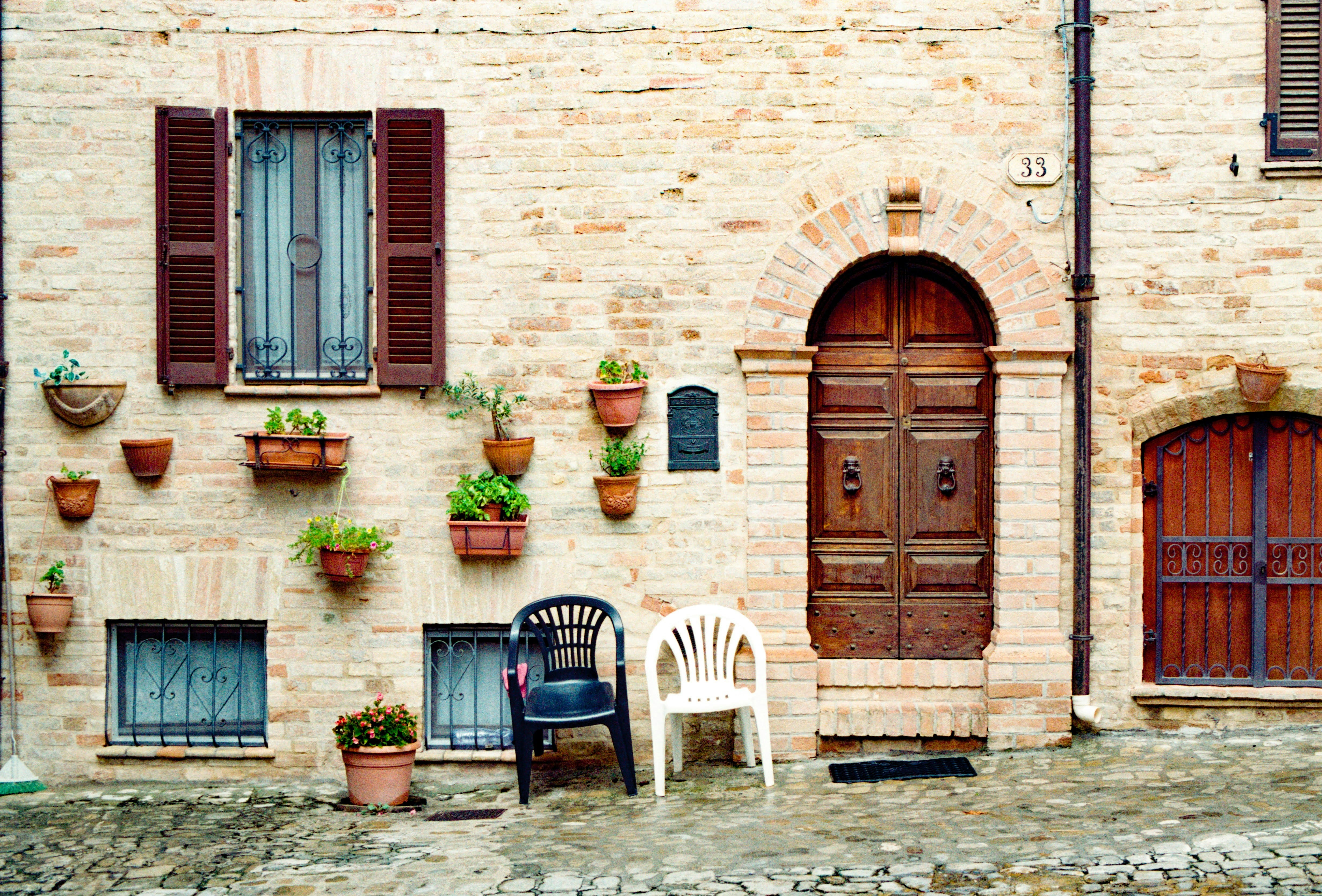
The house that really caught them sat awkwardly in between categories: not a romantic ruin, not a turnkey Airbnb flat. Three narrow floors, 110 square metres, a hand-drawn-looking terrace, and a price that — by Dutch standards — felt like a typo: €68,000.
“It felt suspiciously reasonable,” Maartje recalls. She wasn’t wrong.
The first hurdle wasn’t the notary, but an unfinished inheritance. Two siblings in Canada, one in San Benedetto, one who didn’t reply to emails because “he doesn’t read PEC”. Three months just to work out who was supposed to sign what.
In the meantime, they rented a small flat above the main square: €420 a month, pellet heating included, church bells at 7am included too.
Renovation came later, fuelled by the optimism of people who hadn’t yet discovered their first “unexpected variation”. Initial estimate: €45,000. Final cost: €63,800.
The difference? Damp in the walls, an underestimated floor structure, and lighting. “In the Netherlands, light is almost philosophical,” Joris says. “Here, it’s a negotiation.”
Work progressed at a very Marche pace: not slow, but sideways. The plumber showed up when it rained. The electrician only on Tuesdays. The builder stopped at 4pm because “the mortar needs to rest”.
Along the way, they learned that:
– you get a tax code faster if you smile;
– residency requires patience — and the right doorbell;
– fibre internet arrives, but first you must convince the technician the house actually exists.
They both work online: Joris as a product manager for a logistics scale-up, Maartje as an HR consultant for Nordic companies. The real challenge wasn’t time zones, but silence.
“At first it made us uneasy,” they admit. “Then we stopped trying to fill it.”
Ripatransone adopted them quietly. The bar owner saving them a seat when they’re late. The upstairs neighbour knocking just to warn them: “Market tomorrow — park elsewhere.”
At Christmas, someone asks if they’ll be “staying next year”. That’s when they realise they already are.
One year after the purchase, the balance sheet looks unexpectedly clear:
– House + renovation: around €135,000
– Annual costs (now first residence, utilities, upkeep): under €3,500
– Quality of life: hard to itemise
It hasn’t all been smooth. Healthcare takes learning. The municipality doesn’t always reply. Some friends still don’t understand why there.
But Joris and Maartje have stopped framing it as a radical choice. They prefer to call it a solution that worked.
“It’s not a fairytale,” they say. “It’s an ordinary life — just with more space around us, and less noise inside.”
And without trying to be, Ripatransone has become exactly that.


