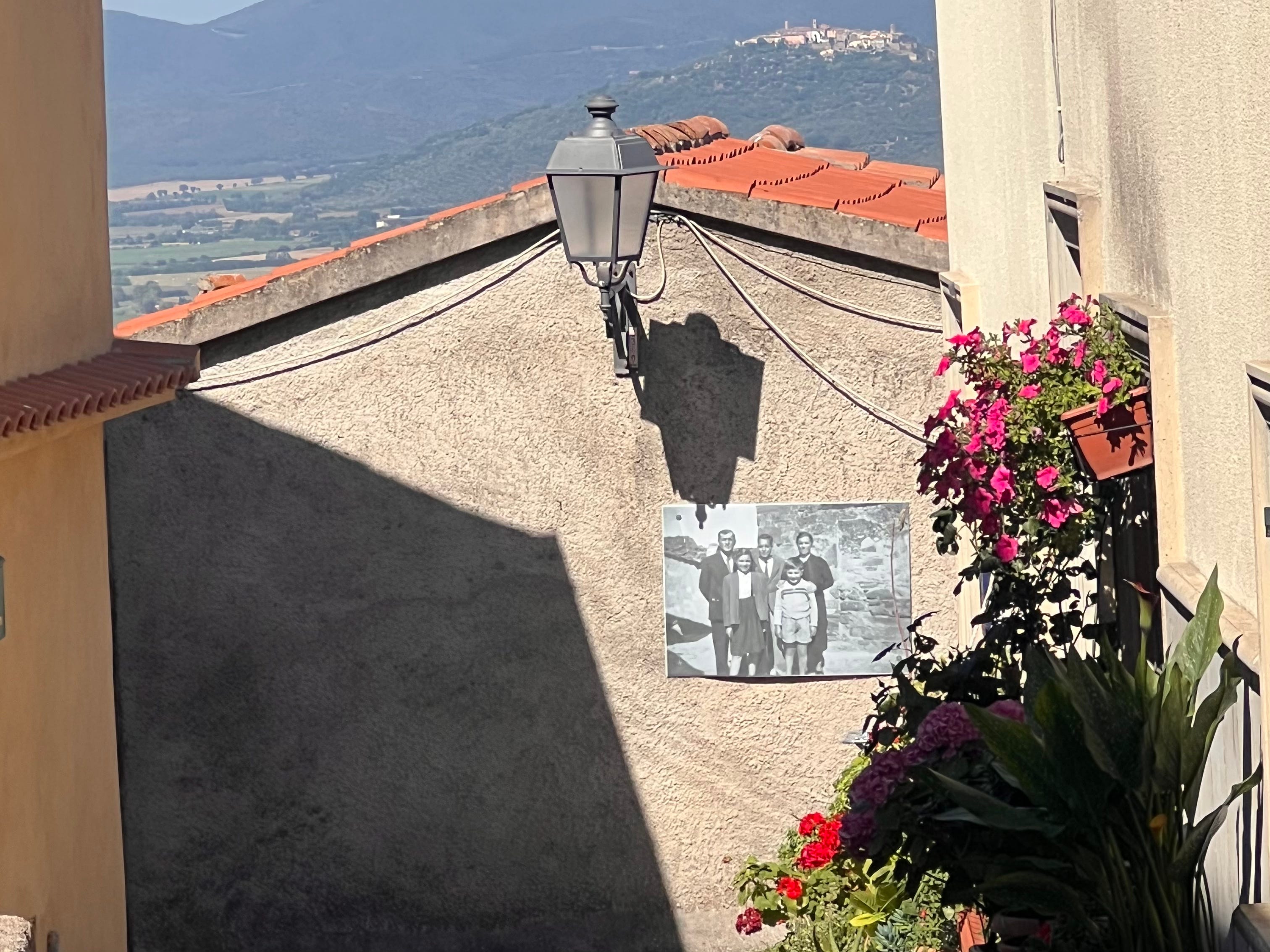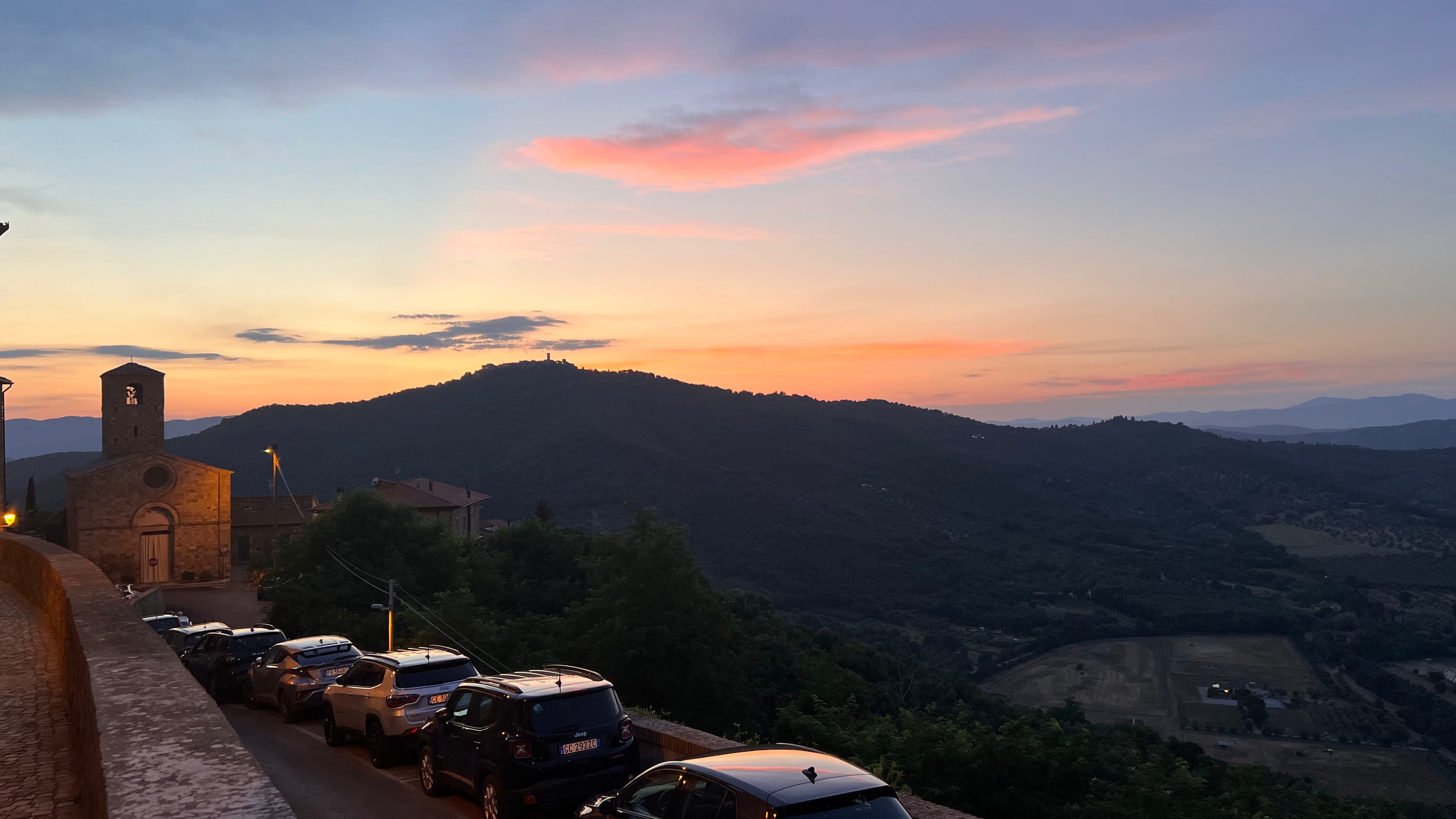
… a small village in Tuscany, where the beauty of place is inseparable from the patience, humility and responsibility required to engage with it properly.
There is a useful sentence at the heart of Cassandra Tresl ’s recent article, ‘Don’t Blame the Village’: the problem is not necessarily small-town Italy, but the fantasy people bring with them when they buy into it. It is a simple point, almost obvious once stated clearly, and yet it remains one of the most misunderstood truths in the international conversation around Italian villages, cheap houses, rural living and the increasingly romanticised idea that one can purchase a stone house, add a few linen curtains, survive some amusing paperwork, and emerge on the other side as the protagonist of a more authentic life.
The village, in other words, is rarely the problem. The problem is often that people have bought a house as if they were buying a mood board.
I am writing this while physically sitting in one of those villages myself: Buriano, in Tuscany, a small hilltop place in the municipality of Castiglione della Pescaia, not far from the sea and yet very much not reducible to the usual foreign fantasy of “near the sea, therefore easy, romantic and effortlessly desirable”. For several weeks I have been here working on a project, dealing with the heat, with the practical fatigue of making things happen in an old place, with the countless small frictions that come from trying to turn an idea into something real, and also with the more subtle difficulties of understanding local rhythms, local doubts, local memories and, yes, sometimes local diffidence.
That diffidence is not an obstacle to be conquered. It is part of the reality one has to respect.
This is where I think the conversation about Italian villages often goes wrong. People speak about rural Italy as if it were empty space waiting for new energy, new capital and new imagination, when in fact these places are not empty at all. They are full of stories, habits, relationships, private griefs, practical knowledge, family memories, informal economies, disappointments, loyalties, and sometimes very reasonable suspicion towards anyone arriving from elsewhere with big words about regeneration. A village is not a backdrop. It is not a lifestyle package. It is not a cheaper version of Florence with better parking. It is a living social fabric, and entering it requires something more demanding than taste.
This does not mean that outsiders should not buy houses, invest, move, restore, create businesses or bring new ideas. Quite the opposite. Many villages need new residents, new uses, new energy, new services and new forms of economic life if they are not to become museum pieces or seasonal postcards. But the difference between contributing to a place and consuming it is enormous, even when the visual result looks similar from the outside. A renovated house can be an act of care, or it can be an act of extraction. A boutique hospitality project can create value, or it can simply turn local life into scenery for someone else’s idea of authenticity. A foreign buyer can become part of a community, or remain permanently suspended above it, enjoying the view while never really understanding the place.
Tresl’s article is right to insist that small-town life can work perfectly well if one actually wants small-town life. The essential point, however, is that wanting the image of small-town life is not the same thing as wanting the life itself. It is easy to want the stone walls, the silence, the slower pace, the seasonal produce, the old men in the piazza, the church bells, the hilltop view and the idea that life has somehow become simpler. It is harder to want the winter, the distance, the limited services, the need for a car, the closed shops, the paperwork, the local politics, the difficulty of finding workers at the exact moment one needs them, and the reality that not every solution can be imported from Milan, London, New York or wherever one’s previous idea of efficiency was formed.
This is also where due diligence has to become much more serious than the standard property checklist. It is not enough to ask whether the roof is sound, whether the asking price is low, whether the beach is close, whether there is fibre in the municipality, or whether the house looks magical in the late afternoon light. One has to ask whether the place is liveable in February, whether the road is manageable in bad weather, whether the internet reaches that specific house rather than a more fortunate street nearby, whether local tradespeople are available and willing to work there, whether the town has a functioning relationship with its own future, whether there are services that matter beyond the tourist season, and whether one is prepared to live with a level of inconvenience that may be charming for a week and exhausting after three months.
But even that is not enough. There is another layer of research, more uncomfortable and more important, which concerns the community itself. Who lives there all year? What has the village already lost? What does it still protect? What do local people think is needed, rather than what an outsider imagines would look good in a brochure? Who are the people who know how things actually work? What stories are at risk of disappearing? What local skills could be supported rather than replaced? What would regeneration mean if it began not with property values, but with the dignity and usefulness of the people already there?
This is very close to the principle behind the work we try to do with ITS Italy. The point is not to arrive as expats, or as urban citizens with vaguely colonial expectations about how smaller places should be “improved”, but to support and enable projects with local people and, where possible, by local people. Regeneration should not mean repainting walls, opening elegant accommodation and writing poetic captions about authenticity while the actual community remains peripheral to the story. It should mean creating conditions in which local histories, local abilities and local ambitions can become part of the future economy of a place.
That distinction matters because Italy has become extremely good at selling the imagery of its fragile places, often much better than it is at supporting the people who keep those places alive. International media love the abandoned house, the €1 property, the medieval village saved by foreigners, the romantic couple who “escaped” the city and found meaning among olive trees, as if meaning were simply waiting in the landscape rather than built through relationships, responsibility and time. There is nothing wrong with romance, and there is certainly nothing wrong with beauty, but beauty without responsibility becomes consumption. It allows people to enjoy the village aesthetically while avoiding the less photogenic question of what their presence actually does to the place.
In Buriano, as in many other small Italian villages, one quickly understands that the peace of the place is not passive. It is not a decorative silence. It is made of lives that have accumulated there, of families who have stayed or left, of people who have seen projects come and go, of houses that carry more memory than their square metres suggest. Working here requires patience not because the village is backward, but because the village is not a blank sheet. There are reasons why people hesitate. There are reasons why trust is slow. There are reasons why “the obvious solution” brought from outside may not be the right one locally.
Sometimes this is frustrating. Of course it is. There are days when one would like decisions to move faster, conversations to be simpler, suppliers to appear immediately, bureaucracy to become logical, and every practical problem to accept the neat solution one had in mind. But that impatience is revealing, because it shows exactly where the outsider’s fantasy ends and the real work begins. If the only version of village life one can tolerate is the version that adapts immediately to one’s expectations, then one does not want the village. One wants a set.
This is why the more serious conversation about rural Italy should move beyond the lazy binary of “villages are magical” versus “villages are impossible”. Both are false, or at least incomplete. Villages can be extraordinary, but not because they suspend reality. They are extraordinary precisely because they are real: limited, beautiful, inconvenient, generous, difficult, slow, human, sometimes suspicious, sometimes unexpectedly supportive, and often much more complex than the person buying a cheap house has been led to believe.
The practical lesson is therefore not “do not buy in a village”. That would be far too blunt, and in many cases wrong. The lesson is also not “follow your dream”, which is the sort of advice that has helped create half the problem. The lesson is: understand the life attached to the property before pretending the property will transform your life. Rent first if possible. Visit out of season. Spend time there when nobody is trying to impress you. Speak to those who live there all year. Understand services, costs, climate, access, tax, resale, renovation, healthcare, schools, transport and internet. But also understand the people, because the people are not an accessory to the landscape.
For international buyers, this requires humility. For Italian institutions and local actors, it requires strategy. For those of us working on projects of regeneration, hospitality, territorial development or cultural repositioning, it requires a discipline that is both practical and ethical: we must resist the temptation to turn villages into branded experiences detached from their own communities. The future of rural Italy cannot depend only on outsiders discovering it, buying it, aestheticising it and then leaving when the reality becomes too heavy. It has to be built through models that make local participation possible, local value visible and local stories economically relevant without reducing them to folklore.
So yes, do not blame the village. Blame the fantasy, the bad research, the cheap-house headline, the estate-agent poetry, the social media reel, the foreign buyer who thinks charm is infrastructure, and the urban professional who arrives with the quiet conviction that a place is improved the moment it becomes legible to people like them.
But after that, do something more useful than blaming. Listen. Stay longer. Ask better questions. Work with the people who are already there. Accept that the solution you would normally choose may not be the right one in that place. Understand that regeneration is not just the renovation of buildings, but the patient construction of trust, usefulness and shared value.
A village can be a wonderful place to live, invest, work or build something meaningful. But only if one accepts that the real project is not simply buying a house. The real project is learning how to belong without pretending to own the story.