Dove il coworking non arriverebbe mai, arrivano le Poste Italiane
Where Coworking Would Never Go, the Post Office Already Has
E improvvisamente fare impresa nei territori smette di essere pura narrativa
Un equivoco che continuiamo a ripetere
C’è un equivoco strutturale nel modo in cui raccontiamo innovazione, lavoro remoto e territori marginali, ed è l’idea che basti trasferire modelli per attivare contesti che, per definizione, non sono stati costruiti per sostenerli. Negli ultimi anni abbiamo visto replicare ovunque lo stesso schema: coworking, community, startup, nomadi digitali. Funziona - più o meno - dove esiste già una massa critica. Non funziona nei piccoli comuni, dove quella massa non c’è e dove l’infrastruttura di base è stata progressivamente smantellata.
È per questo che quello che sta facendo Poste Italiane merita un’attenzione diversa dal solito entusiasmo superficiale. Non perché sia “innovativo” nel senso più glamour del termine, ma perché è una delle poche iniziative che partono da un dato reale: l’infrastruttura esiste già, è diffusa, è utilizzata, ed è riconosciuta. L’intuizione, raccontata da Antonio Prigiobbo su StartupBusiness, non è costruire nuovi spazi, ma ri-funzionalizzare quelli esistenti.
Una rete che esiste già
Se si entra nel merito, il dato più rilevante è la scala. Poste Italiane è presente con oltre 12.000 uffici sul territorio nazionale, una delle reti più capillari d’Europa, spesso unica presenza istituzionale stabile nei piccoli comuni sotto i 5.000 abitanti. In parallelo, i dati della Banca d’Italia raccontano una dinamica opposta: negli ultimi anni centinaia di sportelli bancari sono stati chiusi proprio in queste aree, insieme a una progressiva riduzione di servizi pubblici e privati.
Il risultato è semplice: intere porzioni di territorio si trovano oggi senza infrastrutture operative di base per chi vuole lavorare, gestire un’attività o semplicemente operare con continuità. In questo contesto, l’ufficio postale ha assunto un ruolo che va ben oltre la funzione originaria. È diventato un punto di accesso al sistema, un presidio economico e sociale, un luogo di passaggio quotidiano.
Il ruolo reale degli uffici postali nei piccoli comuni
Chi lavora sul campo lo vede con chiarezza. Nei piccoli comuni, l’ufficio postale non è uno dei tanti servizi, ma uno dei pochi rimasti. Non è raro che sia il luogo più frequentato insieme al bar, con una funzione che è allo stesso tempo operativa e relazionale.
Strumenti semplici come la Postepay, spesso sottovalutati nei contesti urbani, diventano in questi territori strumenti fondamentali di accesso. Per chi non è residente, per chi non ha un rapporto immediato con il sistema bancario tradizionale, rappresentano un primo livello di operatività concreta.
Questo livello di infrastruttura minima, che in città diamo per scontato, nei piccoli comuni è spesso l’unico disponibile.
Perché il coworking “classico” qui non funziona
In questo scenario, l’idea di portare coworking tradizionale appare per quello che è: una forzatura. Non per mancanza di visione, ma per assenza di condizioni strutturali. Il coworking funziona dove esiste una domanda continua, una comunità professionale attiva, una rete di servizi complementari. Nei piccoli comuni, questi elementi sono rari o frammentati.
Costruire spazi nuovi in assenza di queste condizioni significa spesso creare contenitori vuoti o sostenuti artificialmente. Il problema non è lo spazio in sé, ma il contesto in cui dovrebbe funzionare.
La vera intuizione: aggiungere funzione, non costruire spazio
Ed è qui che il progetto “Spazi per l’Italia” cambia prospettiva. Non tenta di creare un ecosistema da zero, ma introduce una funzione nuova dentro un’infrastruttura esistente. È un passaggio che sembra marginale, ma che in realtà riduce drasticamente il costo e la complessità dell’attivazione.
Gli spazi già esistono. Sono accessibili. Sono frequentati. Sono riconosciuti.
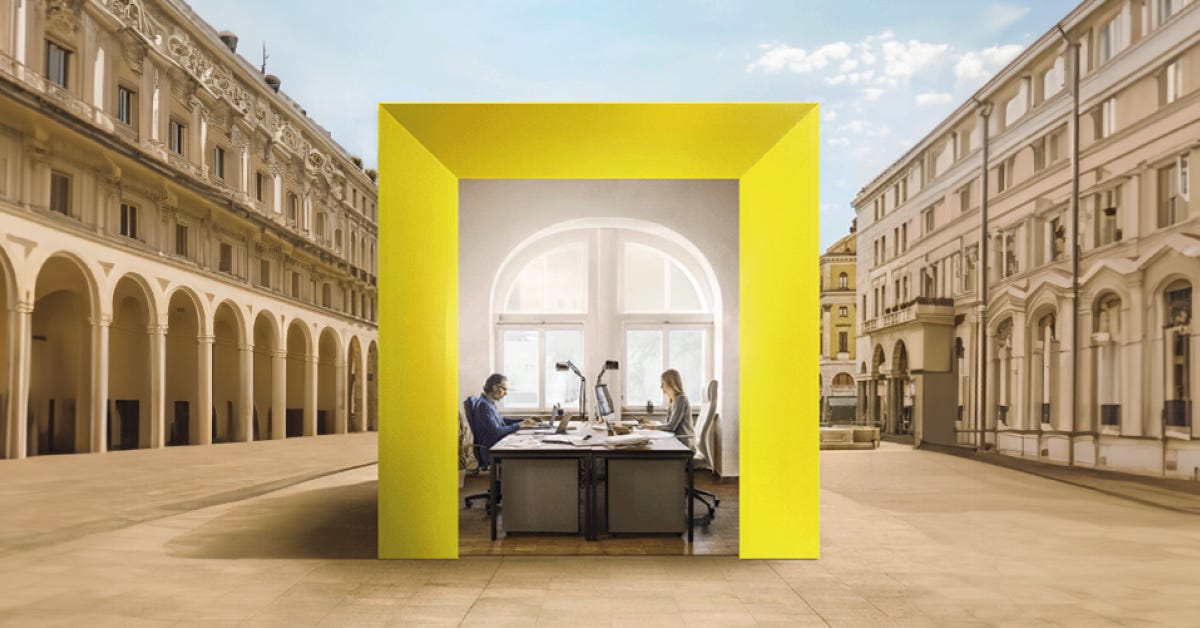
Affiancare a questi luoghi la possibilità di lavorare, incontrarsi, utilizzare servizi condivisi significa rendere operativa una funzione che prima non era disponibile, senza dover costruire tutto il resto.
Accessibilità e sostenibilità: i primi segnali concreti
Un elemento non secondario è il tema dei costi. Le soluzioni proposte risultano, almeno nelle prime implementazioni, accessibili rispetto agli standard urbani e coerenti con il contesto territoriale. Il fatto che alcune location risultino già esaurite indica una domanda reale, non costruita.
Questo è forse il dato più interessante, perché segnala che esiste un bisogno latente che non ha mai trovato una risposta strutturata.
Quando l’impresa smette di essere teoria
A quel punto il discorso sull’impresa nei piccoli comuni cambia natura. Non si tratta più di costruire narrative attrattive o di immaginare scenari ideali, ma di verificare condizioni operative minime. E una di queste condizioni è sempre la stessa: avere un luogo fisico dove lavorare, incontrarsi, organizzarsi.
Senza questo, tutto il resto resta teorico.
Per chi lavora su progetti di attivazione territoriale, la differenza è immediata. Noi operiamo in oltre venti piccoli comuni e lavoriamo con persone che arrivano da tutta Italia e dall’estero con l’intenzione di costruire una presenza reale. Il limite, nella maggior parte dei casi, non è culturale ma infrastrutturale.
Quando quell’infrastruttura inizia a esistere, anche in forma minima, la distanza tra intenzione e possibilità si riduce in modo significativo.
Operazione immobiliare o infrastruttura civica?
Resta aperta la questione più importante. Come sottolineato anche nell’analisi di partenza, il rischio è che questa iniziativa si fermi a una logica di valorizzazione immobiliare. È una traiettoria legittima, ma limitata.
L’alternativa è molto più interessante: trasformare questa rete in una vera infrastruttura civica per il lavoro e l’impresa diffusa, accessibile e integrata con i territori.
Questo dipenderà da elementi molto concreti: criteri di accesso, sostenibilità dei prezzi, capacità di lavorare con chi già opera nei piccoli comuni.
Una convergenza possibile (e necessaria)
Per chi, come noi, lavora quotidianamente su questi territori, il punto è diretto. Esiste una domanda reale fatta di persone che vogliono vivere e lavorare nei piccoli comuni. Esiste un’infrastruttura capillare che può abilitare questa possibilità.
Se queste due dimensioni iniziano a dialogare in modo strutturato, allora l’idea di fare impresa nei territori smette di essere un esercizio retorico e diventa una possibilità concreta.
E in un Paese che da anni discute di spopolamento senza riuscire a costruire strumenti operativi su larga scala, è già un cambio di passo significativo.
Where Coworking Would Never Go, the Post Office Already Has
And suddenly, building a business in small towns stops being a narrative
A misunderstanding we keep repeating
There is a structural misunderstanding in the way we talk about innovation, remote work, and peripheral territories, and it comes down to a very convenient assumption: that you can activate a place simply by importing a model.
Coworking, startup ecosystems, digital nomads, communities.
We package them, we move them, we replicate them.
This works — more or less — where a critical mass already exists. It does not work in small towns, where that mass has never been there in the first place, and where basic infrastructure has been steadily retreating for years.
This is why what Poste Italiane is doing deserves a different kind of attention. Not because it is “innovative” in a fashionable sense, but because it starts from something much more uncomfortable and much more real: the infrastructure is already there.
The insight, which I came across thanks to an article by Antonio Prigiobbo published on NaStartup, is not about building new spaces. It is about rethinking the ones that already exist.
An infrastructure nobody really looks at
If you take a step back and look at the numbers, the scale is hard to ignore. Poste Italiane operates over 12,000 offices across the country, making it one of the most extensive territorial networks in Europe. In many small towns, especially those under 5,000 inhabitants, it is often the only remaining institutional presence.
At the same time, the opposite trend has been unfolding quietly. According to data from the Bank of Italy, hundreds of bank branches have closed in smaller municipalities over the past decade. Public and private services have progressively concentrated in larger urban centers.
The outcome is straightforward: entire areas have been left without the minimum operational infrastructure required to work, run a business, or even manage everyday economic life.
In that context, the local post office is no longer “just a service.” It becomes access. It becomes continuity. It becomes one of the last functional nodes in an otherwise shrinking system.
What the post office really is in a small town
If you spend time in these places, you quickly realise something that is often missed in policy discussions.
The post office is not marginal. It is central.
It is one of the few places people still go to regularly. It sits alongside — and sometimes above — the bar in terms of daily relevance. It handles payments, financial access, logistics, and increasingly digital services.
Even something as simple as a prepaid card becomes critical. Tools like Postepay, often overlooked in urban environments, become essential entry points for people who are not fully integrated into the traditional banking system, including non-residents trying to operate within the country.
This layer of “basic infrastructure,” which is taken for granted in cities, is often the only one available in small towns.
Why traditional coworking doesn’t belong here
In this scenario, trying to introduce traditional coworking models is not ambitious. It is misplaced.
Not because the idea is wrong in itself, but because the conditions required for it to function simply do not exist. Coworking relies on density, continuity of demand, a professional community, and a network of complementary services.
In small towns, these elements are fragmented or absent.
Building new spaces without addressing this gap usually leads to empty rooms or artificially sustained projects. The issue is not space. It is context.
The real shift: adding function instead of building space
This is where the “Spazi per l’Italia” initiative changes the conversation.
Instead of creating a new ecosystem, it introduces a new function within an existing one.
The spaces are already there.
They are accessible.
They are used.
They are trusted.
By enabling workspaces, meeting areas, and shared services inside post offices, the model removes a significant part of the friction that normally prevents any form of economic activation in these areas.
It does not attempt to replicate an urban model. It makes a local system slightly more capable.
And that is often enough to unlock something that was previously impossible.
Affordability and early signals of demand
Another element that should not be underestimated is pricing. The cost structure of these spaces appears to be aligned with the territories they serve, rather than with metropolitan benchmarks.
This matters.
Some locations are already fully booked. That alone suggests that the demand is not hypothetical. It exists, and it has simply been waiting for a viable entry point.
When business stops being theoretical
At this point, the conversation around entrepreneurship in small towns shifts from aspiration to feasibility.
The issue is no longer whether people are willing to move, experiment, or invest time in these places. That willingness already exists. The issue is whether they have the minimum conditions to operate.
And one of those conditions is always the same: a place where you can sit, connect, work, and meet others.
Without that, everything else remains theoretical.
In our case, working with ITS Italy across more than twenty small municipalities, this gap is evident every single day. We engage with people coming from Italy and abroad who are not looking for a temporary experience, but for a way to build something — even small, even gradual.
Too often, the limitation is not cultural or social. It is infrastructural.
When that infrastructure starts to exist — even in a minimal, distributed form — the distance between intention and action becomes significantly smaller.
Real estate play or civic infrastructure?
There is, however, a critical question that cannot be ignored.
As highlighted in the original analysis, this initiative could remain a well-executed real estate optimisation strategy. Turning underused spaces into revenue-generating assets is legitimate, but limited in scope.
The alternative is far more interesting.
These spaces could evolve into a distributed civic infrastructure for work and entrepreneurship — accessible, affordable, and embedded within local communities.
The difference will depend on very concrete choices: access criteria, long-term pricing, and the willingness to engage with those already operating within these territories.
A convergence that is already there
From our perspective, the equation is simple.
There is a growing number of people willing to live and work in small towns.
There is an existing, capillary infrastructure capable of supporting that transition.
If these two dimensions start to interact in a structured way, then the idea of building a business outside major urban centres stops being a narrative exercise and becomes an operational possibility.
And in a country that has been discussing depopulation for years without scaling viable solutions, that alone would already be a meaningful shift.