Forget prosecco - this is where to go for Italy's finest wines
By: Mia Aimaro Ogden for The Sunday Times

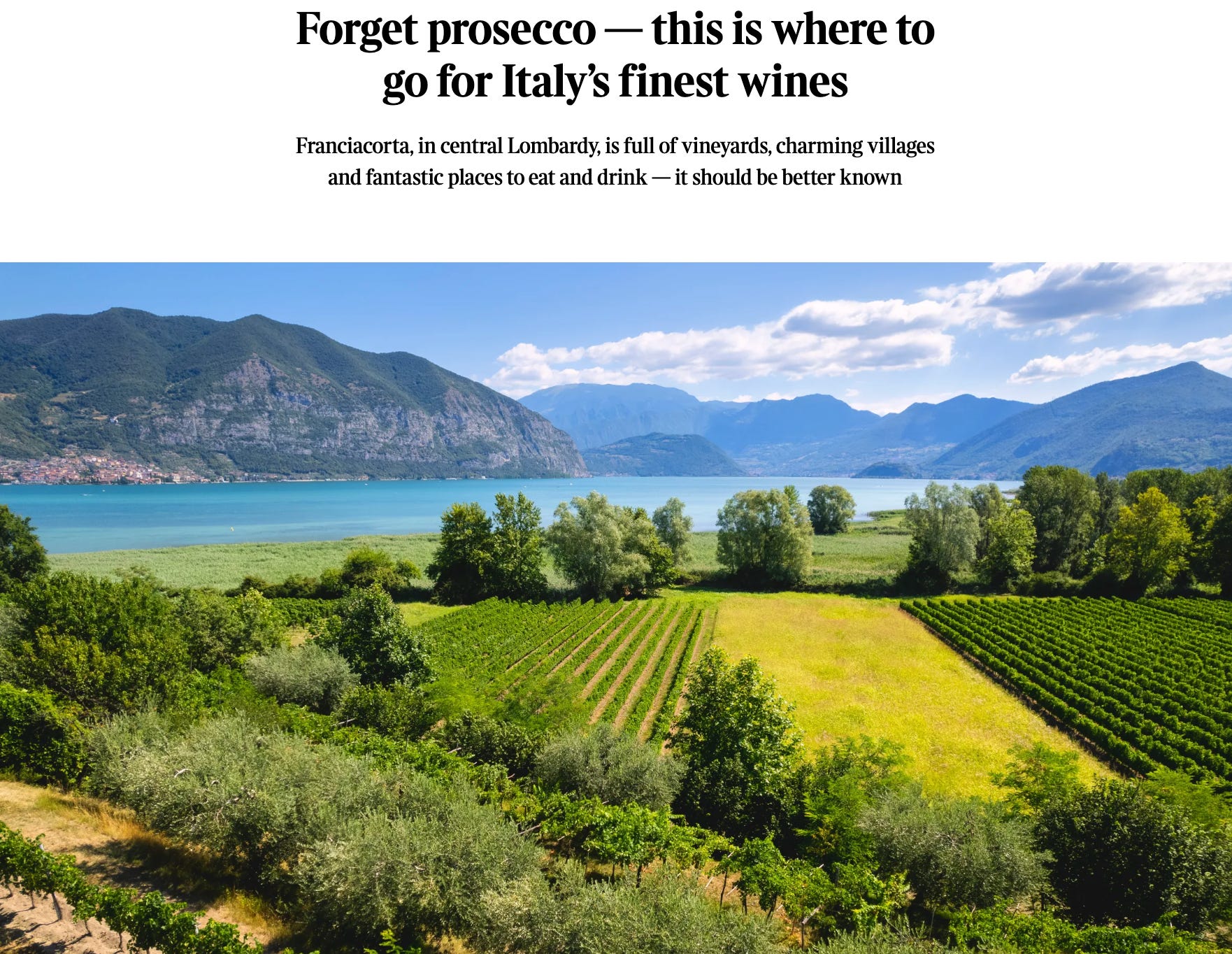
In a recent piece published by The Sunday Times, journalist Mia Aimaro Ogden takes readers into Franciacorta, a quietly confident region in Lombardy that produces what is arguably Italy’s most structured and disciplined sparkling wine.
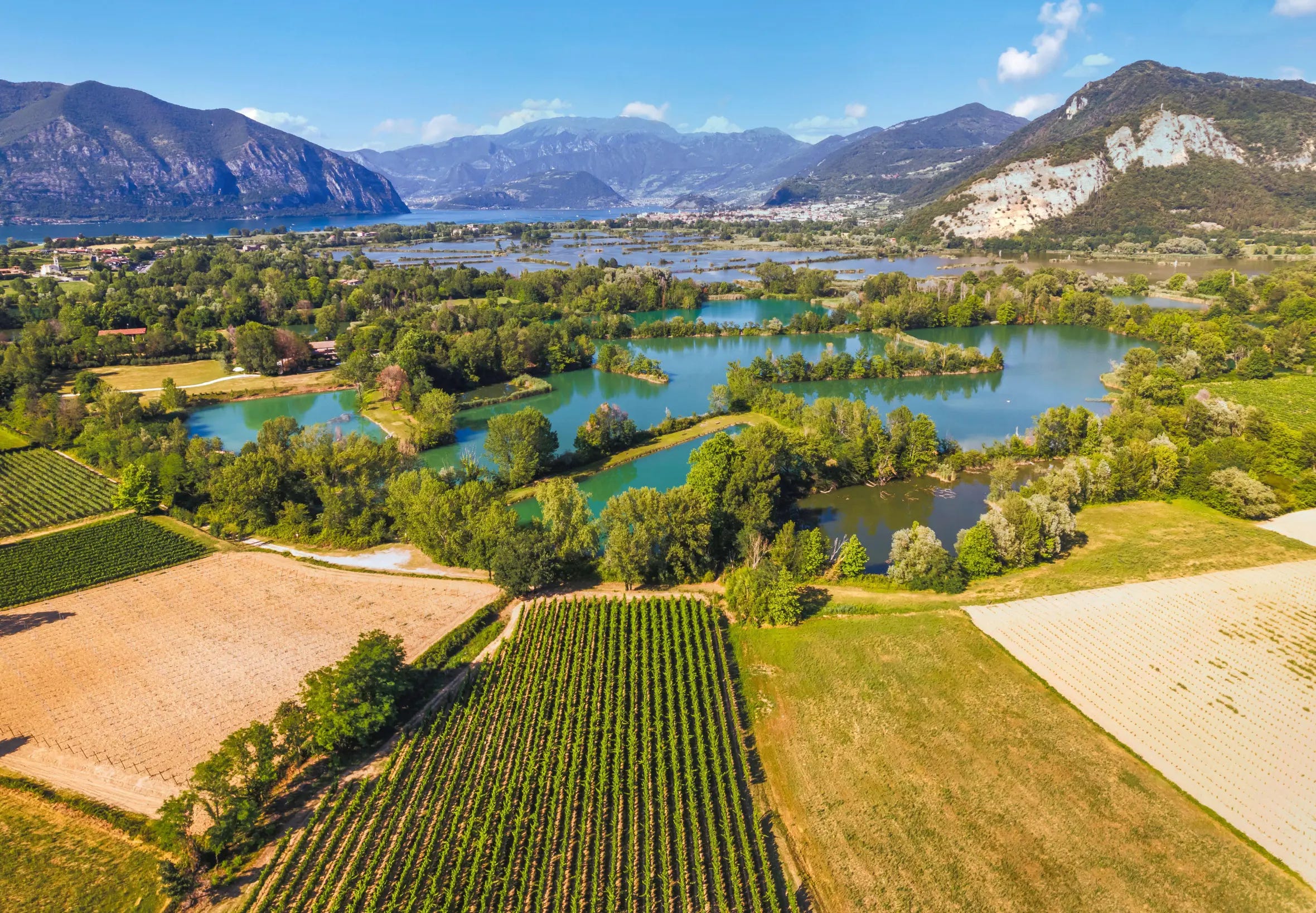
At first glance, it’s all there. Vineyards stretching across a carefully defined territory. Small villages shaped by centuries of agricultural continuity. Monasteries, lake views, and a hospitality ecosystem that feels curated without being artificial. The kind of place that, on paper, should already sit comfortably on the global map of premium wine destinations.
And yet, it doesn’t.
Because Franciacorta is not unknown — it’s under-recognised. And those are two very different problems.
The wines themselves follow the traditional method, with strict production rules and a limited set of permitted grape varieties. The region operates within a clearly defined geographical area of around 3,000 hectares, producing roughly 20 million bottles per year.
This is not scale-driven production. It is controlled, intentional, and positioned at the higher end of the market.
But markets don’t operate on structure alone.
The contrast becomes almost uncomfortable when you look at consumption patterns. In the UK, prosecco dominates with over 100 million bottles annually, while champagne maintains its role as a global reference point for luxury. Franciacorta, by comparison, barely registers.
Not because it cannot compete — but because it doesn’t enter the same conversation.
This is where the issue shifts from product to perception.
Prosecco works because it is immediate. It requires no explanation, no context. It is casual, accessible, and repeatable. Champagne, on the other hand, benefits from centuries of accumulated symbolism — it is not just a drink, but a cultural shortcut for celebration and status.
Franciacorta sits in between.
Too complex to be casual.
Too under-narrated to be iconic.
And in today’s market, the middle is the hardest place to survive.
What Ogden’s article captures — perhaps unintentionally — is that Franciacorta is not failing. It is simply playing a different game. One that prioritises coherence over expansion, identity over scale.
From historic producers to smaller, family-run wineries, there is a shared logic across the territory. Even the more modern, design-led cantine don’t feel disconnected from the landscape. There is a sense of alignment that is rare in more aggressively commercial regions.
But alignment doesn’t automatically translate into visibility.
Visibility requires repetition. It requires distribution. It requires a narrative that can travel faster than the product itself.
And Franciacorta, for now, still moves at its own pace.
Which raises a more interesting question — one that goes beyond wine.
Is this lack of mainstream recognition actually a weakness?
Or is it, in part, what preserves the integrity of the region?
Because the moment a place becomes fully legible to the global market, it also becomes simplified. Standardised. Replicated.
Franciacorta, today, still resists that process.
And maybe that’s not a positioning failure.
Maybe it’s a choice.
Suggested reads (same author)
If you want to see how Italy is packaged for a broader international audience, two other pieces by Mia Aimaro Ogden are worth reading — more mainstream, slightly more “commercial”, but revealing in their own way:
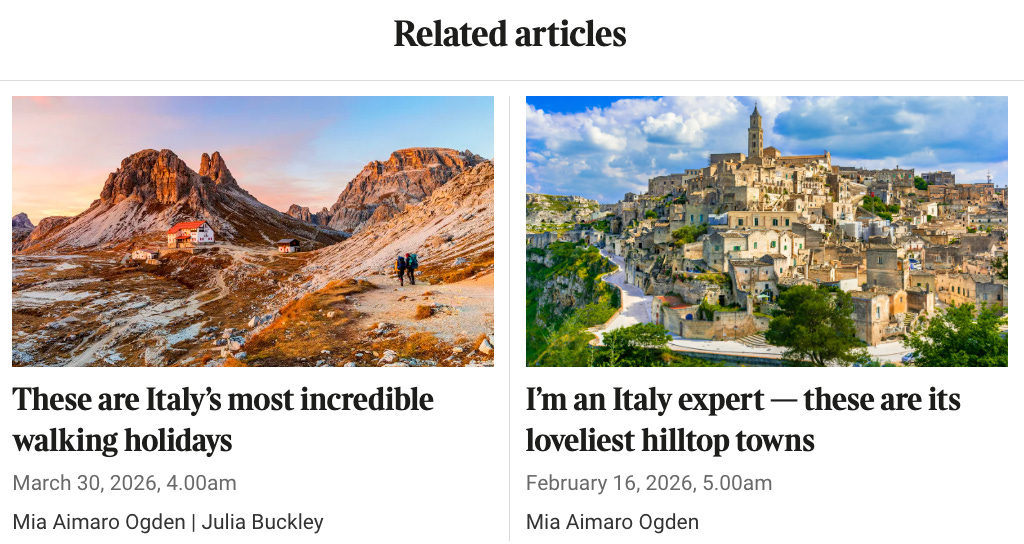
These are Italy’s most incredible walking holidays — where Italy is framed as a landscape to be experienced slowly, step by step.
I’m an Italy expert — these are its loveliest hilltop towns — a curated selection that reinforces a familiar but highly exportable image of the country.
Different angles, same mechanism: turning complexity into something easily consumable.