

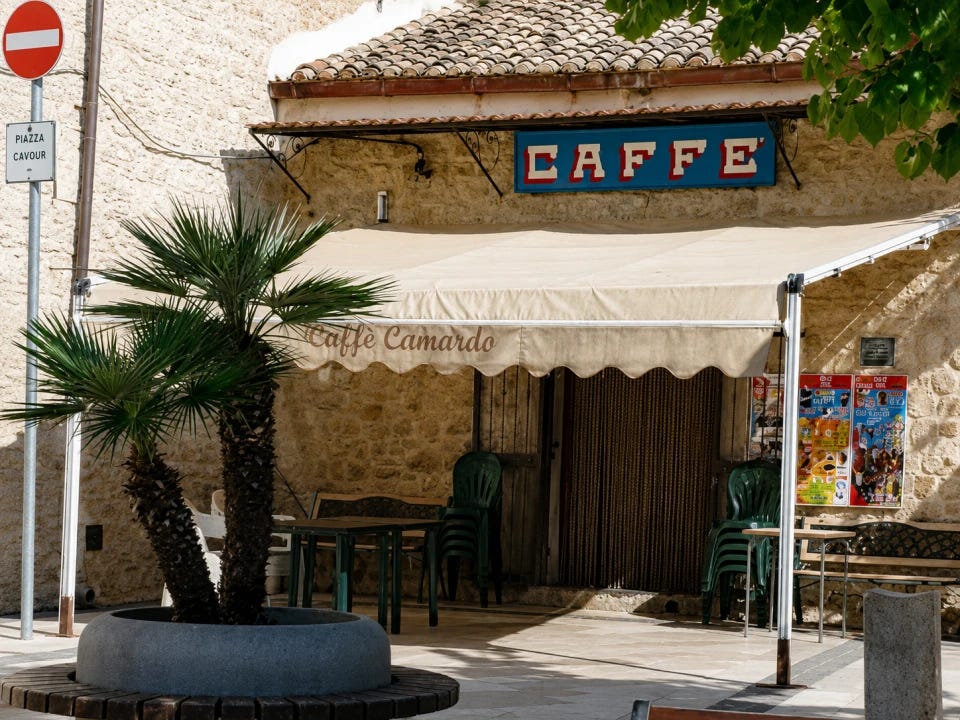
In Italy’s small towns, a bar is rarely just a place to drink coffee. It is a meeting point, an informal town hall, a place where generations cross paths and where everyday community life survives. That is why the story coming from Pietramontecorvino, a village of about 2,350 residents in the province of Foggia, Puglia, is particularly good news.
The historic Bar Caffè Basile closed on January 26 after 138 years. Founded in 1888 by Aniello Basile, it had become a local institution near Piazza Cavour, at the end of Corso Aldo Moro, the town’s main street. Basile even traveled to Naples to learn the secrets of gelato, bringing artisanal ice cream back to his small Apulian community.
Most recently run by Nicola and Lucia, the bar seemed destined to disappear. Instead, local residents decided that losing it would mean losing much more than a business.
The association Dalla parte dei paesi responded to the community’s appeal and developed a grassroots regeneration project supported by the municipality. The space will reopen under a fitting new name: “Ce vedeme o’ cafè” – “See you at the café.”
The former bar will become a community gathering place with shared furniture, books, games and small cultural activities. The initiative is also inspired by France’s “1000 cafés” model, created to revive cafés in small communities.
The message extends far beyond Pietramontecorvino. Across Italy’s borghi, bars, cafés and small stores provide something that statistics cannot easily measure: human connection. When the last café disappears, a village loses one of its living rooms.
In Pietramontecorvino, the community chose another ending. After 138 years, the coffee machine will start again – and so will an important piece of village life.