


C’è un momento che conosco bene.
È quello in cui tutto sembra fermo. In cui non stai andando da nessuna parte — o almeno così ti sembra. Il lavoro che non ti soddisfa più. Il paese che hai lasciato o stai pensando di lasciare. Il progetto che non hai ancora iniziato. La vita che senti che potrebbe essere diversa, ma non sai ancora come.
Quel momento di stasi ha un nome che nessuno ti insegna.
Si chiama rincorsa.
Ho imparato questa parola da mio figlio.
Ha due anni e tre mesi. Quando vuole saltare qualcosa di alto, non parte di scatto. Si ferma. Prende posizione. Dondola sulle gambe. Conta qualcosa nella sua testa che solo lui sa contare. Poi corre.
Non gli ho insegnato io questa cosa. L’ha scoperta da solo, come scoprono tutto i bambini — provando, cadendo, riprovando.
E io, che lavoro nel digitale da anni e so costruire strategie per gli altri, me ne stavo lì a guardare un bambino di due anni che mi insegnava qualcosa che avevo dimenticato.
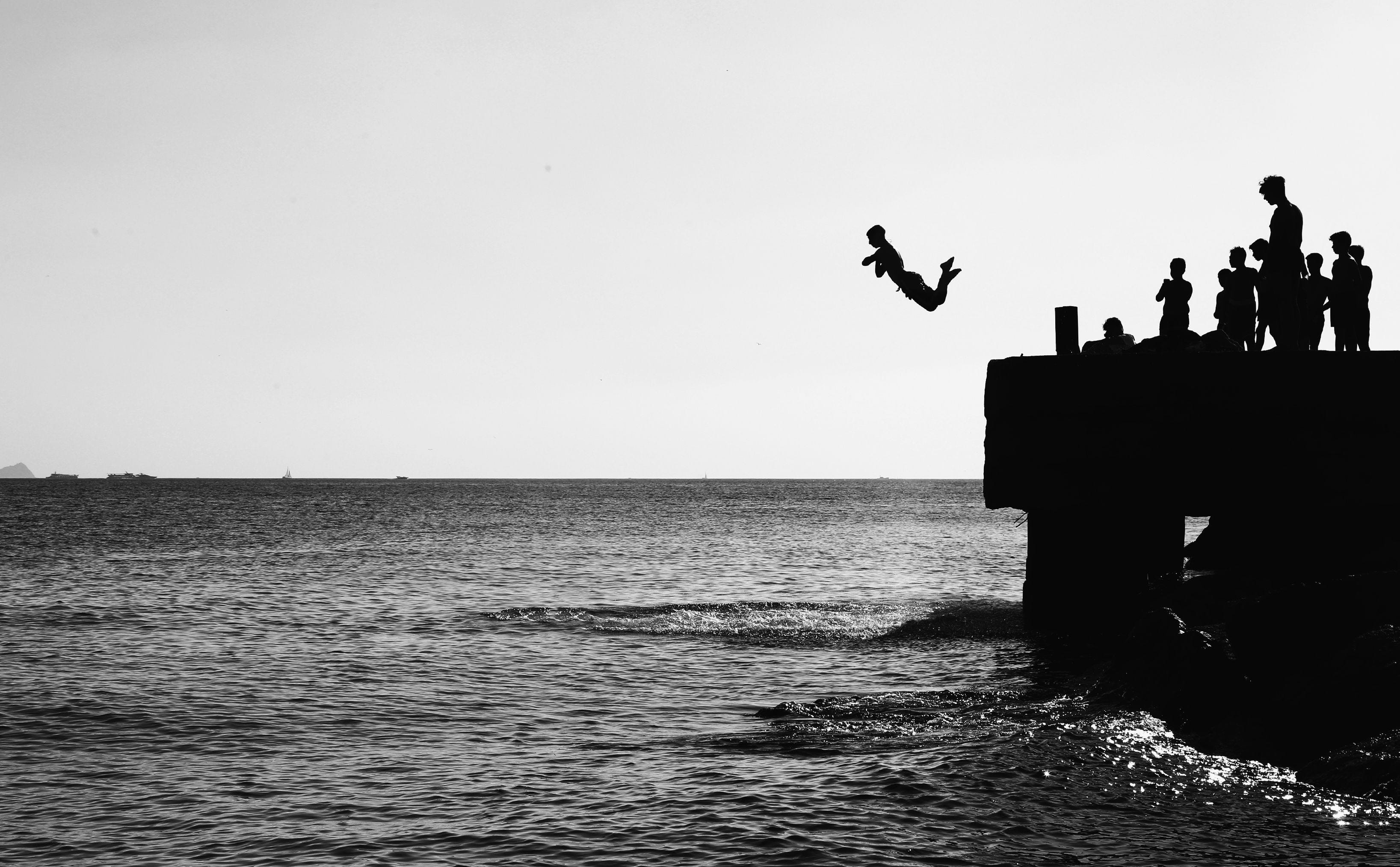
A volte stare fermi significa solo stare per prendere una super mega rincorsa per il prossimo salto nel buio.
Il problema è che da adulti non sappiamo più riconoscere la rincorsa.
La confondiamo con la paura. Con la procrastinazione. Con la mancanza di coraggio. Ci diciamo che stiamo aspettando il momento giusto — e nel frattempo ci vergogniamo di stare fermi, come se la stasi fosse una colpa.
Ma c’è una differenza enorme tra chi è fermo perché ha smesso di correre e chi è fermo perché sta caricando.
Il primo si vede dagli occhi — spenti, rassegnati, già altrove. Il secondo si vede dalla tensione — quella postura di chi sa che tra poco partirà, anche se ancora non sa esattamente dove.
Ho incontrato molte persone in rincorsa.
Chi ha lasciato un lavoro sicuro per aprire qualcosa di proprio — e nei mesi di mezzo, quelli in cui non era ancora niente di nuovo ma non era più quello di prima, sembrava immobile a chi lo guardava da fuori.
Chi ha lasciato l’Italia per costruire qualcosa altrove — e prima di partire aveva attraversato mesi di dubbio, di preparazione silenziosa, di conversazioni notturne con se stesso.
Chi ha deciso di restare — e in quella scelta, apparentemente passiva, aveva messo più coraggio di chi era partito.
Tutti sembravano fermi. Nessuno lo era davvero.
Stavano prendendo la rincorsa.
Il salto nel buio spaventa perché non si vede dove si atterra.
Ma la rincorsa — quella si può imparare a riconoscere. Nei segnali piccoli: la curiosità che torna, le conversazioni che cambiano argomento, i libri che cominci a leggere diversi da quelli di prima. Il momento in cui smetti di difendere quello che hai e inizi a immaginare quello che potrebbe essere.
Quando arrivano questi segnali, non ignorarli.
Non sa ancora niente del mondo — non sa che esistono i lavori da lasciare, i paesi da raggiungere, le decisioni difficili. Sa solo come si chiede quello di cui hai bisogno, senza strategie, senza ottimizzazioni.
E sa già — lo vedo quando allunga le braccia verso qualcosa che vuole — che per raggiungere quello che vuoi devi prima caricare il peso del corpo, poi spingere, poi lasciare andare.
Sempre.
Riccardo D’Uggento scrive Il Margine Bianco, una newsletter settimanale su paternità, storytelling e vita intenzionale. ilmarginebianco.substack.com
The Running Start
There’s a moment I know well.
The one where everything feels still. Where you don’t seem to be going anywhere. The job that no longer satisfies you. The country you’ve left or are thinking of leaving. The project you haven’t started yet. The life you sense could be different — but you don’t know how yet.
That moment of stillness has a name no one ever teaches you. It’s called the running start.
I learned this word from my son.
He’s two years and three months old. When he wants to jump over something high, he doesn’t take off straight away. He stops. He takes his position. He rocks back and forth on his legs. He counts something in his head that only he knows how to count. Then he runs.
I didn’t teach him this. He figured it out on his own, the way children figure out everything — by trying, falling, trying again.
And I was standing there watching a two-year-old teach me something I had forgotten.
Sometimes being still just means you’re about to take a massive running start for the next leap into the dark.
The problem is that as adults, we no longer know how to recognise the running start.
We mistake it for fear. For procrastination. For lack of courage. We tell ourselves we’re waiting for the right moment — and meanwhile we feel ashamed of standing still, as if stillness were a fault.
But there’s an enormous difference between someone who’s stopped because they’ve given up running and someone who’s stopped because they’re loading up.
You can see it in their eyes. The first kind — dim, resigned, already somewhere else. The second kind — tense, alert, like someone who knows they’re about to go, even if they don’t yet know exactly where.
I’ve met many people in their running start.
Someone who left a secure job to build something of their own — and in the months in between, when they were no longer what they used to be but not yet anything new, they seemed motionless to anyone watching from the outside.
Someone who left Italy to build something elsewhere — and before leaving had spent months in doubt, in silent preparation, in late-night conversations with themselves.
Someone who decided to stay — and in that seemingly passive choice had put more courage than those who had left.
They all looked still. None of them really were.
They were taking the running start.
The leap into the dark is frightening because you can’t see where you’ll land.
But the running start — that you can learn to recognise. In the small signals: curiosity returning, conversations shifting to different subjects, the books you start reading that are different from before. The moment when you stop defending what you have and start imagining what could be.
When these signals arrive, don’t ignore them.
You’re not stuck. You’re loading up.
My daughter was born eleven days ago. Her name is Bianca.
She knows nothing of the world yet — nothing about jobs to leave, countries to reach, difficult decisions. She only knows how to ask for what she needs, without strategies, without optimisations.
And she already knows — I can see it when she reaches her arms toward something she wants — that to get what you want you first have to load the weight of your body, then push, then let go.
The running start always comes before the leap.
Always.
Riccardo D’Uggento writes Il Margine Bianco, a weekly Italian newsletter on fatherhood, storytelling and intentional living. ilmarginebianco.substack.com
