Da qualche mese, per poter seguire da vicino gli sviluppi di alcuni progetti di rigenerazione che abbiamo in Maremma, io e mia moglie abbiamo deciso di andare full in e trasferirci in una piccola frazione medievale del meraviglioso comune di Castiglione della Pescaia.
All’anagrafe risultano circa 150 residenti, anche se sospetto che si tratti di una stima decisamente generosa: d’inverno mi sembrano molti meno e, in alcuni momenti della giornata, credo che nel territorio comunale ci siano più cinghiali e gatti che persone.
La popolazione stabile è composta soprattutto da persone anziane, qualche immigrato e, sorprendentemente, anche parecchi bambini, almeno se rapportati alle dimensioni del paese. Poi, con l’arrivo della bella stagione, tornano i turisti e i “cittadini”, come vengono talvolta considerati quelli che vivono altrove e riaprono le proprie case di vacanza.
Qui ci sono un negozio, un baretto-circolino aperto per qualche ora al giorno e un ufficio postale operativo due mattine alla settimana. E, più o meno, questo è tutto.
Il telefono cellulare non prende praticamente mai. In compenso internet, pur non essendo servito dalla fibra, funziona meglio che a Londra, con grande sorpresa persino del gestore, che al momento dell’attivazione aveva quasi cercato di dissuadermi dall’installare il modem.
Il paese è silenziosissimo. Tranne quando passano le Ape Car.
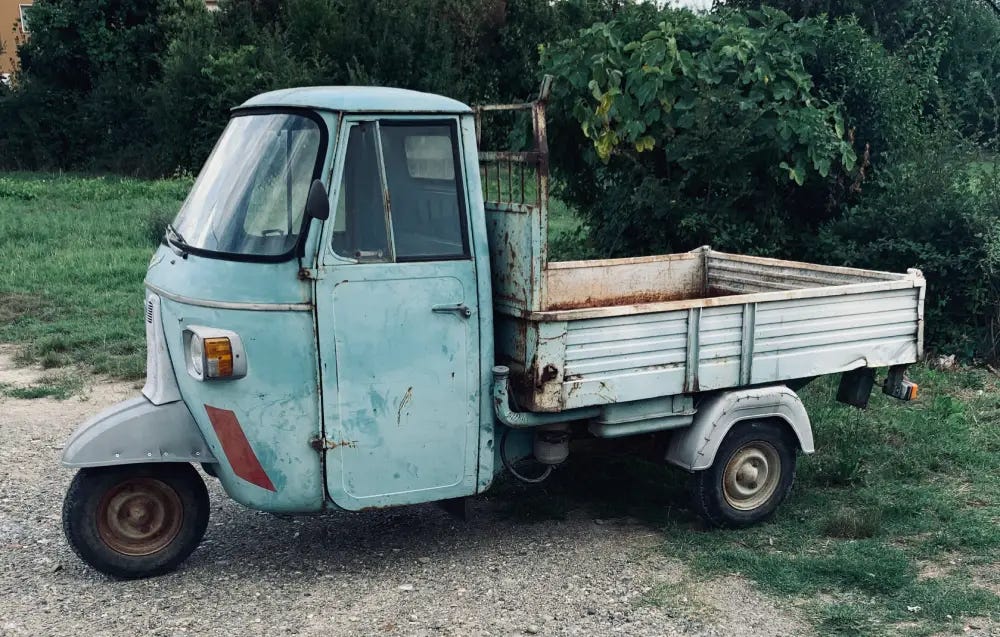
Le Ape, qui, sono una sorta di bene comune: un’infrastruttura essenziale, un servizio di trasporto, logistica, soccorso e condivisione. Ne ho censite almeno tre, ma la mia preferita è quella azzurra del signor Marco, che mi ha aiutato a trasportare alcuni oggetti meglio di un ciuchino, ricevendo in cambio una vecchia cucina che da casa — o, più precisamente, da una delle proprietà di ITS ITALY che abbiamo ristrutturato — è emigrata nel suo capanno di caccia.
L’Ape azzurra fuma più di una petroliera, ha una rumorosità paragonabile a quella di un jet militare e probabilmente non supererebbe senza osservazioni una conferenza internazionale sul clima. Ma fa parte del servizio di sharing locale e, quando serve, arriva.
Per il resto, il silenzio è tale che anche una persona che cammina può diventare un evento acustico. Le case si trovano spesso a pochi metri l’una dall’altra e, di conseguenza, si finisce inevitabilmente per conoscere a memoria discussioni familiari, problemi domestici e, in alcuni casi, persino le condizioni intestinali della cittadinanza.
Esiste una certa chiusura refrattaria nei confronti del forestiero, ma anche un fortissimo spirito di supporto reciproco e di preservazione della comunità. Non manca quella particolare durezza che può nascere quando si è costretti ad accettare di essere stati più o meno dimenticati da Dio e dallo Stato.
Le strade, però, sono pulitissime. E la TARI ha un prezzo talmente elevato da lasciare intuire che la raccolta dei rifiuti venga effettuata personalmente da Sotheby’s.
Noi abbiamo dovuto adattarci. Siamo probabilmente diventati una delle presenze più visibili del paese, anche perché siamo qui per lavorare e viviamo in uno stato di cantierizzazione quasi permanente. Ormai veniamo salutati come si saluta un elemento stabile del paesaggio: la chiesa, la torre medievale, Matteo che sposta materiali.
Con alcuni abitanti è nato anche un piccolo interscambio culturale. Noi sistemiamo qualcosa, facciamo un piccolo intervento, prestiamo una mano o un attrezzo; in cambio, ogni tanto, qualcuno si presenta alla porta con una fetta di cocomero, una torta appena sfornata o una pietanza accompagnata dall’immancabile spiegazione: “Tanto ne avevo fatto troppo”.
Ieri, però, c’è stato il vero punto di svolta.
Sono stato convocato per un intervento informatico sul computer portatile di una delle signore del paese, che trascorre le giornate dividendosi tra Facebook, videogiochini e l’inseguimento del proprio cane, troppo grosso, troppo giovane e troppo entusiasta per essere realmente governabile.
La mia vera aspirazione sarebbe diventare il suo dog sitter. Per il momento, però, sono stato assunto come tecnico informatico.
Il problema era grave: bisognava liberare spazio sul portatile per installare un nuovo gioco di palline colorate.
Quello che avrebbe dovuto essere un intervento di pochi minuti si è trasformato in una revisione completa dell’intero ecosistema tecnologico domestico: computer, telefono, connessioni, applicazioni, password, schermate misteriose e icone che “prima non c’erano”.
La notizia, purtroppo, ha già fatto il giro del paese. Temo quindi che presto sarò visitato da altre vecchiette gamer, con laptop sotto braccio e richieste urgenti di ottimizzazione delle prestazioni.
Durante l’intervento mi sono state offerte panzanella, spezzatino con piselli, caffè e due episodi di una soap opera che, a dire il vero, conoscevo già. Il volume del televisore è tale che riesco a seguirla perfettamente anche da casa mia, una cinquantina di metri più in là.
Io, nelle situazioni sociali, sono impacciato come una bestia. Ma credo che questo sia stato il mio vero battesimo del fuoco ‘locale’.
Il problema, adesso, è capire chi dirà alle vecchiette gamer che, prima o poi, potrei passare al prossimo paese. Come il carabiniere che oggi non c’è più, anche il loro tecnico informatico italo-inglese-milanese potrebbe un giorno spostare il circo altrove.
Temo di essermi inguaiato. Non professionalmente. Emotivamente e affettivamente.
Ed è anche questo, alla fine, ciò che incontriamo in alcuni dei luoghi nei quali operiamo con ITS Italy.
Le nostre case esistono spesso dove si resiste, dove i servizi sono pochi ma le relazioni contano ancora, dove vivere richiede qualche adattamento ma può valerne davvero la pena. Non cerchiamo soltanto immobili da sistemare: cerchiamo luoghi che abbiano ancora una ragione per esistere, anche quando quella ragione non è immediatamente visibile nelle statistiche, nei servizi disponibili o nei programmi di investimento.
Dove siamo ora è probabilmente un caso limite. Ma il mare è vicino, i supermercati abbondano a dieci minuti di distanza e la vita glamour di Castiglione della Pescaia è appena dietro l’angolo.
Insomma, per chi volesse provarci, noi siamo qui. E, in fondo, c’è spazio per tutti.
Una sola avvertenza: per arrivare dentro il paese è preferibile utilizzare un mezzo alto non più di 1,80 metri e largo non più di 1,80 metri.
Altrimenti il rischio è rimanere incastrati in un vicolo medievale, mentre mezzo paese si affaccia alle finestre per godersi lo spettacolo di voi che tentate disperatamente di fare manovra.
In quel caso, però, potrebbe arrivare l’Ape azzurra del signor Marco.
Fa più rumore di un caccia militare, ma probabilmente riuscirà a tirarvi fuori.
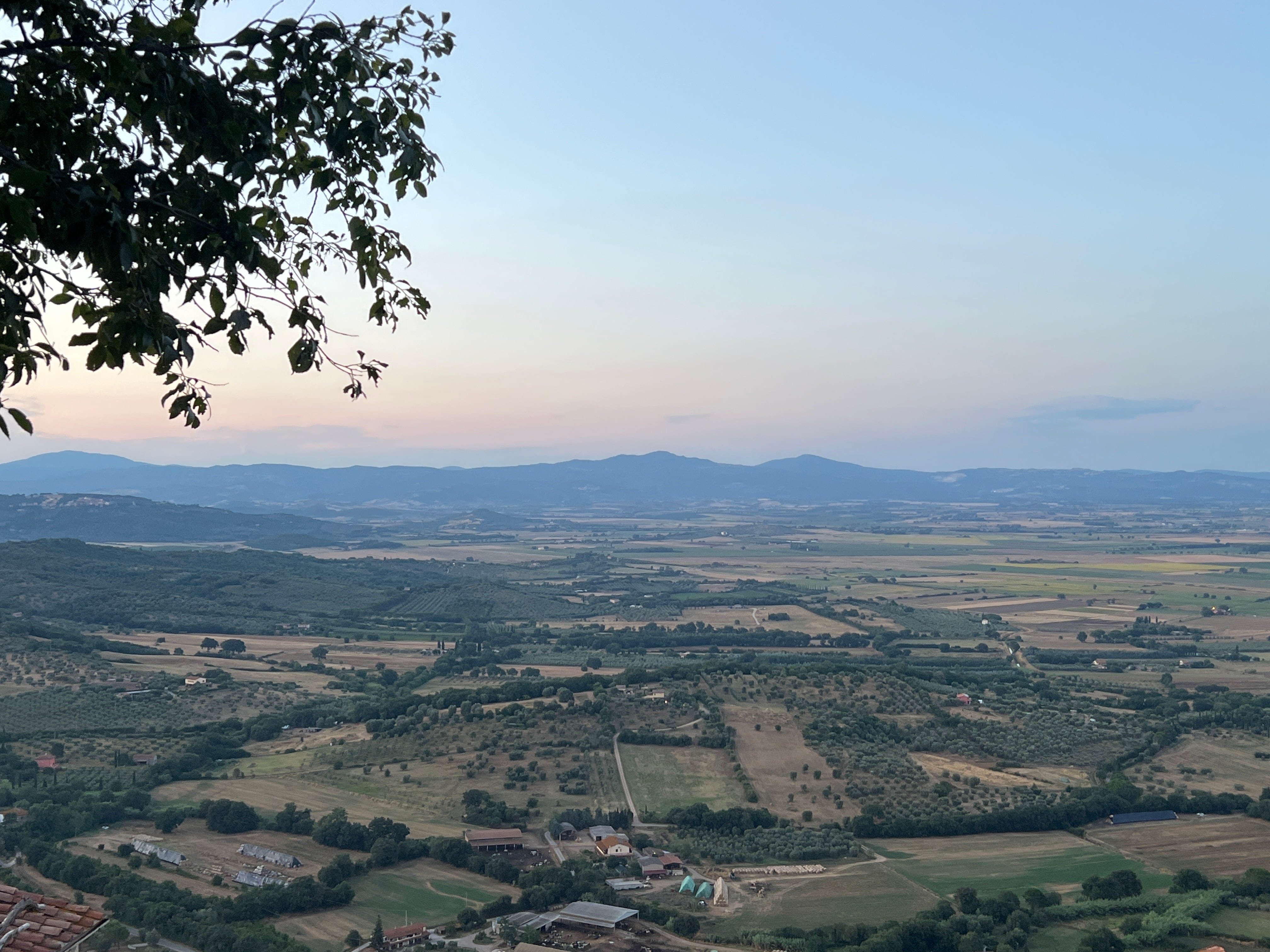
For the past few months, to follow some of our regeneration projects in the Maremma area more closely, my wife and I have decided to go full in and move to a tiny medieval village belonging to the beautiful municipality of Castiglione della Pescaia.
According to the official register, this hamlet has around 150 residents, although I suspect this is an extremely generous estimate. In winter, there appear to be far fewer, and at certain times of the day I am convinced that wild boars and cats outnumber human beings.
The permanent population mainly consists of elderly residents, a few immigrants and, rather surprisingly, quite a few children, at least in proportion to the size of the village. Then, when the warmer season begins, tourists and the so-called “city people” return to reopen their holiday homes.
The village has one shop, a tiny bar and social club that opens for a few hours a day, and a post office operating on two mornings each week. That is, more or less, it.
Mobile phones barely work. The internet, on the other hand, despite not being fibre, performs better than it did in London. This came as a surprise even to the provider, whose representative had almost tried to convince me not to install the modem.
The village is extremely quiet. Except when one of the local Piaggio Ape vehicles drives past.
Here, the Ape is a form of public infrastructure: a transport service, a logistics network, a rescue vehicle and part of the local sharing economy. I have counted at least three of them, although my favourite is Mr Marco’s blue one.
It helped me move several pieces of furniture more efficiently than a donkey, in exchange for an old kitchen that has now emigrated from our house — or, more precisely, from an ITS Italy property — to Marco’s hunting shed.
The blue Ape produces more smoke than an oil tanker, sounds like a military jet and would probably raise a few concerns at an international climate conference. But it is part of the local sharing service and, when needed, it turns up.
Apart from the Ape, the village is so quiet that even somebody walking down the street can become an acoustic event. The houses often stand only a few metres apart, which means that everyone eventually becomes familiar with their neighbours’ family disputes, household problems and, in certain cases, digestive conditions.
There is a certain resistance to outsiders, but also a powerful instinct for mutual support and community preservation. There is also the particular toughness that comes from having to accept that your village has, to some extent, been forgotten by both God and the state.
The streets, however, are spotless. And the local waste tax is so expensive that one might assume rubbish collection is personally managed by Sotheby’s.
We have had to adapt. We have probably become one of the village’s most visible presences, partly because we are here to work and seem to live in a permanent construction site. By now, people greet us as they might greet any other stable feature of the landscape: the church, the medieval tower, Matteo moving building materials.
A small form of cultural exchange has also developed with some of the residents. We fix something, carry out a minor repair, lend a hand or provide a tool. In return, somebody occasionally appears at our door with a slice of watermelon, a freshly baked cake or a plate of food, invariably accompanied by the explanation: “I made too much anyway.”
Yesterday, however, marked the real turning point.
I was summoned to carry out an IT intervention on the laptop of one of the local ladies, who divides her days between Facebook, online games and chasing her dog, which is too large, too young and far too enthusiastic to be genuinely controllable.
My real ambition is to become the dog’s sitter. For now, however, I have been appointed as the village IT technician.
The problem was serious: we needed to clear enough space on the laptop to install a new game involving brightly coloured balls.
What should have been a five-minute operation became a full review of the household’s entire technological ecosystem: computer, telephone, internet connection, applications, passwords, mysterious screens and icons that “weren’t there before”.
Unfortunately, word has already travelled around the village. I now fear that I will soon receive visits from other gamer grannies, each carrying a laptop and requesting urgent performance optimisation.
During the operation, I was offered panzanella, beef stew with peas, coffee and two episodes of a soap opera that, to be honest, I already knew. The television is loud enough for me to follow the storyline perfectly from my own house, about fifty metres away.
I am spectacularly awkward in social situations. But I believe this was my true initiation ceremony.
The problem now is deciding who will tell the gamer grannies that, sooner or later, I may move on to the next village. Like the local Carabiniere officer who is no longer here, their Italian-British-Milanese IT technician may eventually take his travelling circus elsewhere.
I fear I have got myself into trouble. Not professionally. Emotionally.
Ultimately, this is also what we encounter in some of the places where ITS Italy operates.
Our homes are often found in places where people continue to resist, where services may be limited but relationships still matter, and where living requires a degree of adaptation but can genuinely be worthwhile. We are not simply looking for properties to renovate. We are looking for places that still have a reason to exist, even when that reason cannot immediately be found in statistics, available services or public investment programmes.
This particular one is probably an extreme example. Yet the sea is nearby, several supermarkets are only ten minutes away, and the glamorous life of Castiglione della Pescaia is just around the corner.
For anyone willing to try, we are here. And there is, ultimately, room for everyone.
There is just one warning: vehicles entering the medieval centre should preferably be no taller than 1.8 metres and no wider than 1.8 metres.
Otherwise, you may find yourself trapped in a medieval alleyway while half the village leans out of its windows to enjoy the spectacle of you desperately attempting to reverse.
In that case, Mr Marco may arrive in his blue Ape.
It sounds like a military aircraft, but it will probably get you out.