


Before sunrise in Acciaroli, fishing boats are already returning to harbour. Further inland, families tend olive trees, vegetable gardens and local seeds. In kitchens across the municipality of Pollica, ingredients become meals through knowledge handed down over generations.
These are the people the Food and Agriculture Organization of the United Nations (FAO) has chosen to celebrate. Ahead of World Food Day on 16 October, it named the community of Pollica a Food Hero for keeping the heritage of the Mediterranean Diet alive.
The recognition was announced in New York by Maurizio Martina, FAO Deputy Director-General, during Food for Health • Food for Earth, a conference held at New York University and organised by the Future Food Institute during United Nations General Assembly week. It belongs to a whole community: fishers, farmers, cooks, artisans, families, children, researchers and local institutions.
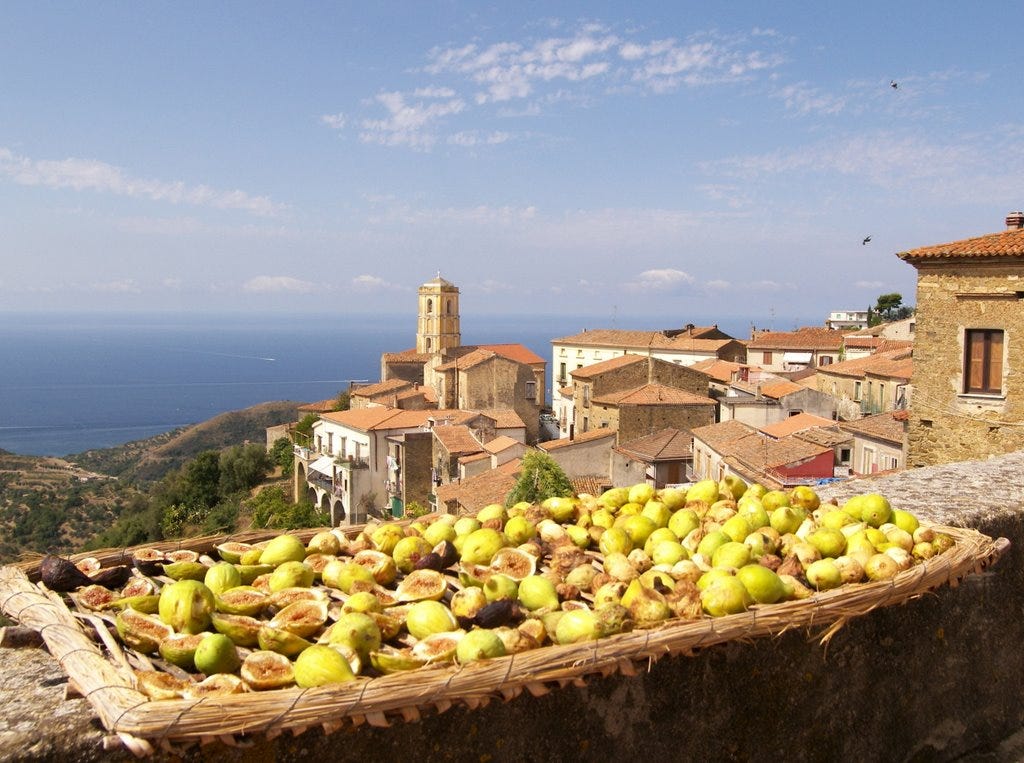
FAO’s portrait of Pollica makes that collective effort tangible. It describes the menaica, an ancient method of fishing for anchovies still practised along this stretch of the Cilento coast, alongside the cultivation of figs, legumes, vegetables and local seeds. Each practice depends on someone knowing how to do it — and having someone to pass that knowledge to.
The Mediterranean Diet is often presented internationally as a healthy way to eat. Its recognition by UNESCO as intangible cultural heritage goes further. It encompasses fishing and farming, preparation and preservation, hospitality and the shared meal. Pollica, which includes Acciaroli and Pioppi, is one of the Italian communities emblematic of that heritage.
Pioppi also has a place in the history of its international reputation. Ancel and Margaret Keys spent long periods there, studying the relationship between local eating habits, ways of life and health. Their work helped bring worldwide attention to the Mediterranean Diet. The FAO recognition turns the spotlight back towards the people whose everyday lives sustain the practices behind the name.
“This recognition puts people and community at the centre,” says Stefano Pisani, Mayor of Pollica, in comments accompanying the announcement. For Pisani, the Diet remains a living heritage because residents continue to practise, protect and pass it on.
A Cilento table in New York
Pollica’s story has also travelled to New York through CONVIVIUM, an East Village programme created by the Future Food Institute during UN General Assembly and Climate Week. Around its tables, researchers, policymakers, businesses and community leaders meet to discuss food, water, public health, climate and biodiversity.
Sara Roversi, President of the Future Food Institute, describes sitting together as a way to share knowledge and responsibility as well as food. It is the idea of gastrodiplomacy in a practical form: a meal creates room for conversations and relationships that a conference agenda alone may not produce.
The New York gathering reflects something familiar in Pollica. A shared table is a place where neighbours meet, children listen and knowledge travels. Bringing that experience to an international audience does not mean every place should copy the Cilento. It offers a question other communities can ask for themselves: who keeps our food heritage alive, and what do they need to continue?
The recognition comes as the world prepares for the first International Day of the Mediterranean Diet on 16 November 2026, established by the United Nations. Between World Food Day in October and that new observance in November, Pollica offers a reminder of what such celebrations are for. A heritage can be studied and honoured, but its future depends on people being able to live it.
In Pollica, the Food Hero is a community — and that may be the most useful part of its story for the rest of the world.