
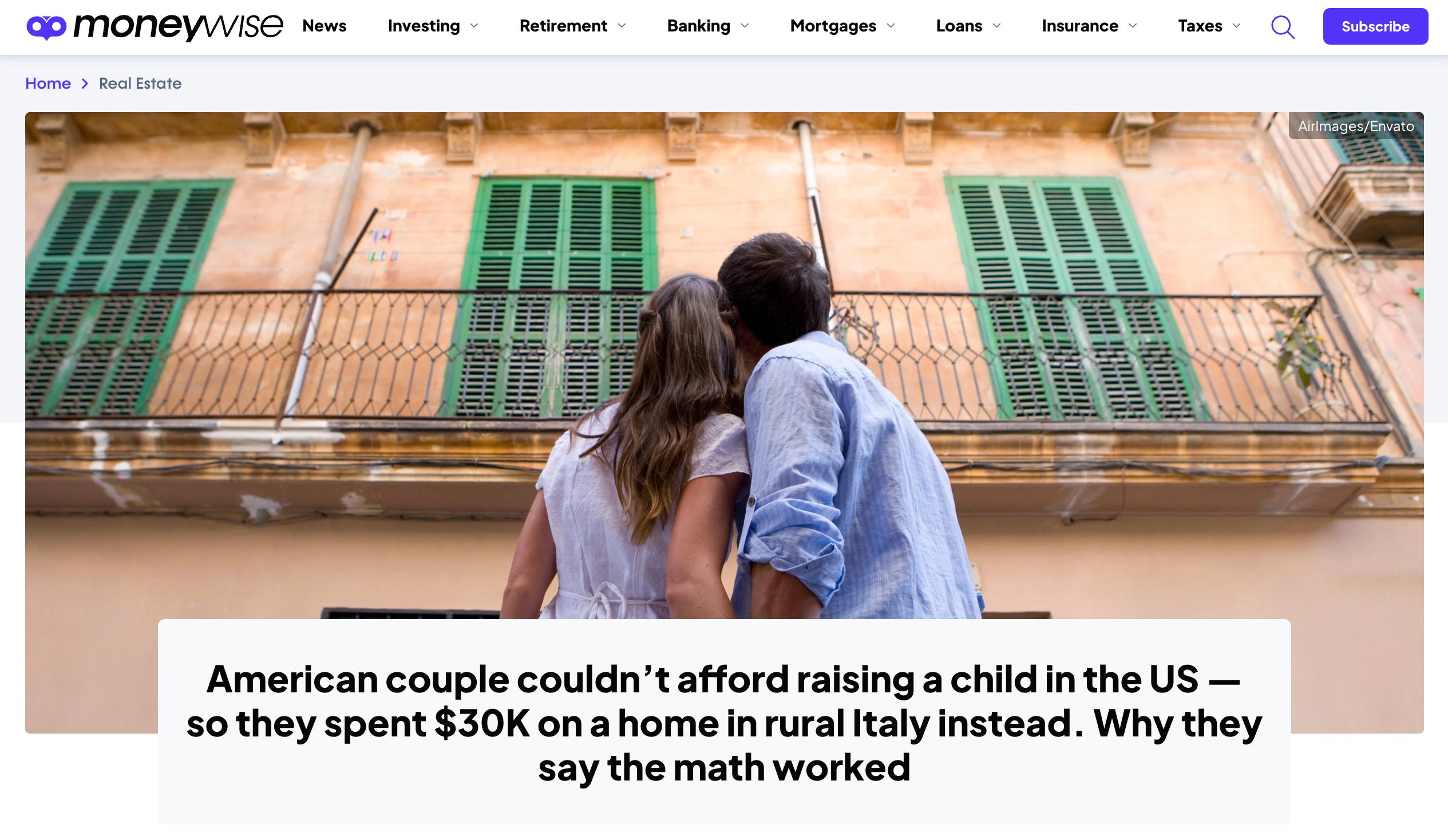
“The $30K House in Italy? The Dream Is Real - The Math Often Isn’t.”
Una casa a 30.000 dollari in Italia? Il sogno è reale. I conti dicono altro.
Tra articoli virali e racconti entusiasti, sempre più americani guardano ai borghi italiani come alternativa alla vita negli Stati Uniti. Ma tra prezzo di acquisto, ristrutturazioni, permessi e integrazione reale, il costo finale è spesso molto diverso da quello che appare online.
Ogni pochi mesi ricompare lo stesso titolo: una coppia americana compra una casa in Italia per 30.000 dollari.
L’ultimo caso è stato raccontato da Moneywise, che riprende la storia di Cassandra Tresl e Alex Ninman, una coppia statunitense che ha acquistato una casa in Abruzzo per circa 11.500 euro e l’ha poi ristrutturata arrivando, secondo il racconto, a un costo totale di circa 30.000 dollari.
Il motivo della scelta è semplice: negli Stati Uniti crescere un figlio è diventato estremamente costoso. Tra casa, sanità e childcare, il conto può facilmente superare centinaia di migliaia di dollari. L’Italia, con ritmi più lenti e costi più bassi, appare quindi come un’alternativa interessante.
Fin qui, nulla di sorprendente.
Ma quando si leggono queste storie, vale sempre la pena fermarsi un momento e fare qualche conto in più.
La prima domanda che raramente trova risposta negli articoli virali è molto semplice: di che casa stiamo parlando davvero?
Perché sì, è assolutamente possibile trovare immobili molto economici in alcune aree rurali italiane. Tuttavia, nella maggior parte dei casi si tratta di abitazioni piccole, spesso da ristrutturare completamente e talvolta vuote da decenni.
E qui entrano in gioco i numeri reali.
Solo per mettere a norma impianti elettrici e idraulici certificati è difficile scendere sotto i 5.000–8.000 euro. A questi si aggiungono infissi, pavimenti, bagni, cucina, eventuali interventi strutturali, oltre ai costi professionali per tecnici, geometri e pratiche edilizie.
Poi ci sono le spese di acquisto: notaio, tasse, registrazioni, traduzioni, consulenze.
Il risultato?
Nella nostra esperienza - dopo aver seguito oltre cento trasferimenti internazionali attraverso i progetti di rigenerazione territoriale di ITS ITALY - il budget realistico per un’operazione di questo tipo è spesso più vicino a 80.000 o 90.000 euro complessivi.
Indicativamente:
25.000–40.000 € acquisto
circa 10.000 € tra notaio, professionisti e pratiche
il resto per ristrutturazione e arredamento
A questo vanno aggiunti i costi meno visibili: trasferimento, tempo necessario per permessi di soggiorno o visti, eventuali assicurazioni sanitarie, integrazione linguistica e viaggi internazionali.
Questo significa che il sogno non esiste?
Assolutamente no.
L’Italia può davvero rappresentare un’alternativa molto interessante per famiglie internazionali con budget limitati, soprattutto se il progetto viene pianificato con realismo.
Quello che spesso manca nei racconti virali è semplicemente il contesto.
Negli ultimi anni abbiamo visto centinaia di persone - americani, europei, digital workers - arrivare nei piccoli comuni italiani con grande entusiasmo. Alcuni attratti dalle famose case a un euro, altri da prezzi apparentemente irrisori.
Molti di questi progetti funzionano.
Altri, invece, si scontrano con una realtà più complessa.
Ed è proprio per questo che vale la pena ricordare una cosa molto semplice: il vero affare non è il prezzo scritto su un portale immobiliare.
Il vero affare è capire bene il progetto.
Quando questo accade, anche con budget relativamente piccoli, vivere in Italia può diventare non solo possibile - ma anche straordinariamente sostenibile.
Viral stories about cheap houses in rural Italy keep attracting Americans looking for a different life. But once renovation costs, permits, visas and real-life logistics are included, the numbers often look very different.
Every few months the same headline appears again: an American couple buys a house in Italy for $30,000.
The latest example comes from Moneywise, which reported the story of Cassandra Tresl and Alex Ninman, a U.S. couple who purchased a home in Abruzzo for about €11,500 and renovated it, bringing the total cost to roughly $30,000.
Their motivation is easy to understand. In the United States, raising a child has become increasingly expensive. Housing, healthcare and childcare costs can easily reach hundreds of thousands of dollars over time. Compared with that, the idea of building a life in rural Italy — with lower costs and a slower pace of life — can look extremely attractive.
So far, nothing surprising.
But whenever these stories go viral, it is worth pausing for a moment and looking more carefully at the numbers.
The first question rarely answered in these articles is simple: what kind of house are we actually talking about?
Yes, extremely cheap properties do exist in some rural areas of Italy. But in many cases they are small homes, often abandoned for decades and requiring extensive renovation.
That is where the real numbers start to appear.
Just bringing electrical and plumbing systems up to legal standards can easily cost €5,000 to €8,000. Then come windows, floors, bathrooms, kitchens, possible structural work and professional fees for engineers, surveyors and building permits.
On top of that, there are the acquisition costs: notary fees, property taxes, translations and legal advice.
The result?
From our experience — after following more than one hundred international relocation projects through the territorial regeneration initiatives of ITS Italy — a realistic total budget is often closer to €80,000–€90,000.
Typically something like:
€25,000–40,000 purchase price
around €10,000 professional and legal costs
the rest for renovation and furnishing
And that still excludes the less visible expenses: relocation logistics, visas or residency permits, private health insurance during transition periods, language integration and travel back to the U.S.
Does that mean the dream is unrealistic?
Not at all.
Italy can genuinely be an attractive option for international families looking for a different lifestyle — especially when the move is planned carefully and with realistic expectations.
What is often missing in viral stories is simply context.
Over the past years we have seen hundreds of people — Americans, Europeans and remote workers — arriving in small Italian towns full of enthusiasm. Some are attracted by the famous one-euro houses, others by extremely low asking prices.
Many projects succeed.
Others encounter a more complicated reality.
Which is why one thing is always worth remembering:
the real bargain is not the price you see on a property listing.
The real bargain is understanding the project behind it.
When that happens, even with relatively modest budgets, building a life in Italy can become not only possible — but remarkably sustainable.


