
The Invisible Greatness of Italy - La grandezza invisibile dell’Italia
By: Maurizio Gigola
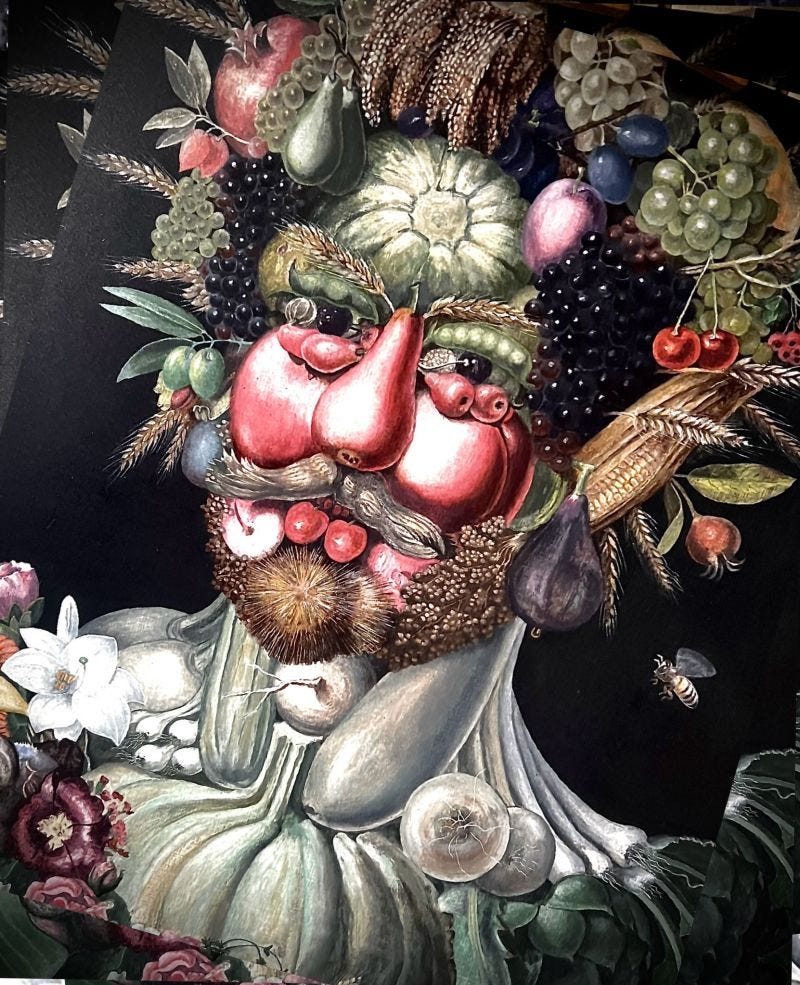
Come un dettaglio - un’ossessione - può rivelare un sistema molto più grande
Questa è la copia di un dipinto di Arcimboldo realizzata da Giuseppe Lega.
Con un piccolo dettaglio in più: la sua ossessione.
Un’ape.
Un elemento quasi invisibile, ma decisivo.
Come spesso accade nelle storie che contano davvero.
Giuseppe Lega è il primo protagonista di una serie che vuole sorprendere: un viaggio dentro quella che possiamo chiamare Grandezza Italiana.
Non quella esposta nelle vetrine.
Ma quella che lavora sotto traccia, ogni giorno.
La Grandezza Italiana non è fatta di slogan.
È un sistema reale, diffuso:
artigiani
imprenditori
territori
filiere produttive
Capaci di generare valore economico, sociale e ambientale insieme.
Eppure, questo sistema ha un problema:
non è visibile.
Da qui nasce The Great Italian, progetto ideato e diretto da Maurizio Gigola e sviluppato con Adrama.
Un percorso che parte da Gualtiero Marchesi, passa dal Festival di Cannes, attraversa 80 sale nel mondo e arriva su piattaforme come Amazon e Hulu, generando milioni di contatti.
Ma il punto non è la distribuzione.
È il metodo.
La narrazione cambia la percezione del valore.
Le storie si ricordano fino a 22 volte più dei dati.
Lo storytelling può aumentare l’engagement fino al 300%.
Il valore percepito cresce quando diventa esperienza.
Il cinema oggi non è più solo racconto.
È uno strumento strategico.
Con Giuseppe Lega entriamo in un tema concreto: la sostenibilità.
Non come parola astratta, ma come modello operativo — dove ambiente, economia e impatto sociale si tengono insieme.
E quell’ape nel quadro non è un dettaglio estetico.
È un segnale.
Un punto di accesso a un sistema molto più grande.
La domanda è semplice:
Se questa Grandezza esiste, perché è ancora così difficile vederla?
Forse perché manca una narrazione capace di renderla riconoscibile.
E oggi, più che mai:
Ciò che non viene raccontato… resta invisibile.
The Invisible Greatness of Italy
How a single detail — an obsession — reveals a much larger system
This is a copy of a painting by Arcimboldo, recreated by Giuseppe Lega.
With one small addition: his obsession.
A bee.
A nearly invisible element — yet decisive.
As often happens in stories that truly matter.
Giuseppe Lega is the first protagonist in a series that aims to surprise: a journey into what we can call Italian Greatness.
Not the one displayed in shop windows.
But the one working quietly, every single day.
Italian Greatness is not made of slogans.
It is a real, distributed system:
artisans
entrepreneurs
territories
production chains
All capable of generating economic, social, and environmental value at the same time.
And yet, this system has a problem:
It is not visible.
This is where The Great Italian begins — a project conceived and directed by Maurizio Gigola, developed with Adrama.
A journey that starts from Gualtiero Marchesi, passes through the Cannes Film Festival, travels across 80 cinemas worldwide, and lands on platforms like Amazon and Hulu, generating millions of views.
But distribution is not the point.
The method is.
Narratives change how value is perceived.
Stories are remembered up to 22 times more than data.
Storytelling can increase engagement by up to 300%.
Perceived value grows when it becomes an experience.
Today, cinema is no longer just storytelling.
It is a strategic tool.
Through Giuseppe Lega, we enter a very concrete theme: sustainability.
Not as an abstract word, but as an operational model — where environment, economy, and social impact coexist and reinforce each other.
And that bee in the painting is not just an aesthetic detail.
It is a signal.
A point of entry into a much larger system.
The question is simple:
If this Greatness exists, why is it still so difficult to see?
Perhaps because what’s missing is a narrative capable of making it recognizable.
And today, more than ever:
What is not told… remains invisible.