



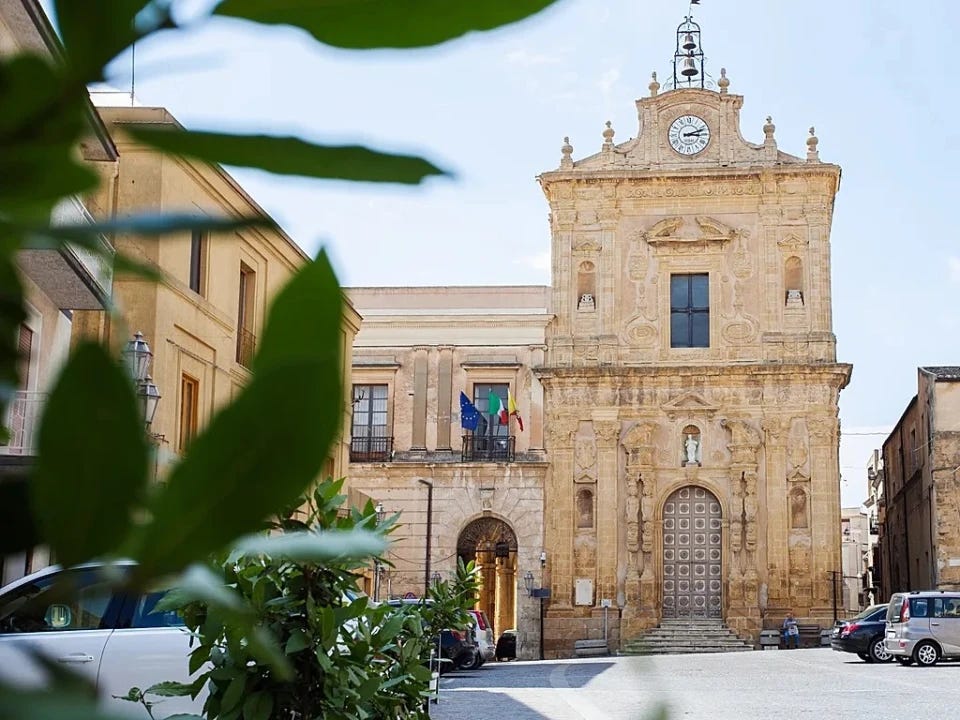
Naro, in provincia di Agrigento, è l’ultima arrivata nella ormai lunga lista dei comuni italiani che hanno deciso di affidarsi alla formula delle case a un euro per provare a riattivare immobili inutilizzati e attirare nuova attenzione sul territorio. L’iniziativa, va detto subito, non ci dispiace affatto e anzi speriamo sinceramente che funzioni, magari meglio e in maniera più duratura di quanto sia accaduto altrove. Il Comune sembra essere partito con un’impostazione relativamente ordinata: un regolamento, un portale dedicato, un catalogo pubblico, procedure per proprietari e aspiranti acquirenti e, al momento, cinque immobili pubblicati. Rispetto a molte iniziative annunciate negli anni con strumenti decisamente più rudimentali, è già un buon punto di partenza.
Quello che colpisce, semmai, è la velocità con cui la storia ha già cominciato a circolare. Idealista ne ha scritto nei primi giorni di agosto, Forbes il 19 agosto, Euronews il 24 e altri media hanno seguito quasi immediatamente. In poche settimane Naro è diventata la nuova entry internazionale nel format ormai perfettamente riconoscibile della casa italiana al prezzo simbolico di un caffè, e con la notizia sono ricomparse anche le associazioni che da quindici anni accompagnano quasi automaticamente questo genere di articoli: recupero degli immobili, turismo, nuovi residenti, contrasto allo spopolamento. Sono tutti obiettivi legittimi e sarebbe ottimo se Naro riuscisse davvero a raggiungerli; il problema è che, come mostra la ricerca che presenteremo a fine settembre, tra il lancio di un programma e la dimostrazione dei suoi effetti reali esiste una distanza che il racconto mediatico tende sistematicamente a comprimere.
C’è poi una domanda molto più banale e molto meno fotogenica, ma forse più importante per chi pensa davvero di comprare: quanto costa effettivamente una casa da un euro? Le cinque proprietà oggi pubblicate sul portale di Naro sono in condizioni molto diverse e diverse richiedono interventi significativi. Al prezzo simbolico vanno quindi aggiunti verifiche tecniche e urbanistiche, progettazione, notaio, imposte, eventuali regolarizzazioni, strutture, impianti, serramenti, finiture e tutto ciò che serve per trasformare un immobile marginale in una casa realmente utilizzabile. Nel frattempo, sui normali portali immobiliari di Naro compaiono già proprietà offerte a 7.000, 8.000 o 10.000 euro, in alcuni casi con lavori importanti dichiarati come già eseguiti. Questo non significa affatto che siano automaticamente affari migliori, perché un annuncio non sostituisce una perizia e due immobili apparentemente simili possono avere problemi completamente diversi; significa però che, in un mercato così economico, la differenza fra un euro e qualche migliaio di euro può diventare relativamente poco importante rispetto al costo complessivo dell’operazione.
È esattamente uno dei temi emersi da Debunking Italy’s €1 House Effect, la ricerca NOMAG Research che presenteremo a fine settembre e nella quale abbiamo analizzato in profondità Salemi, Sambuca di Sicilia, Mussomeli, Ollolai e Fabbriche di Vergemoli, utilizzando dati demografici, transazioni immobiliari OMI, valori, documentazione comunale, turismo, ricettività, percorsi degli acquirenti, letteratura accademica e dati raccolti sul campo. Per quanto abbiamo potuto verificare nella letteratura disponibile, è la prima analisi comparativa data-led che tenta di seguire sistematicamente, su più casi italiani, l’intera catena che va dall’attenzione mediatica all’interesse, dalle transazioni alla ristrutturazione, dall’utilizzo al turismo, fino alla presenza ricorrente, alla residenza e all’eventuale effetto demografico. Il punto metodologico è semplice ma decisivo: una vendita non è una ristrutturazione, una ristrutturazione non è una residenza, una seconda casa non è ripopolamento e un Airbnb non è una famiglia che utilizza servizi locali per dodici mesi all’anno.
Il risultato più costante nei casi analizzati non è infatti il ripopolamento, ma l’attenzione. Il prezzo simbolico funziona in maniera straordinariamente efficace nel rendere visibili a una domanda internazionale immobili e territori che il mercato tradizionale non era riuscito a rendere altrettanto visibili. Nella ricerca abbiamo definito questo effetto information liquidity: prima ancora di creare liquidità immobiliare, la casa a un euro crea liquidità dell’informazione, facendo sapere a milioni di persone che quelle proprietà e quei luoghi esistono. È un effetto reale e può avere conseguenze positive, perché può spingere acquirenti verso il mercato ordinario, attrarre investimenti e riattivare immobili che altrimenti sarebbero rimasti inutilizzati. Mussomeli, per esempio, mostra il segnale più forte di attività nel mercato low-cost ordinario, mentre Sambuca presenta spillover che vanno oltre le sole case a un euro; in altri casi, invece, l’effetto risulta più debole o molto meno facilmente verificabile.
Proprio per questo sarebbe sbagliato liquidare queste iniziative come inutili. Una casa che viene acquistata, recuperata e utilizzata non è più una casa completamente abbandonata; se vengono coinvolti tecnici, imprese, artigiani e fornitori locali, c’è un impatto economico; una seconda casa può generare presenze ricorrenti e una struttura ricettiva può generare turismo. Il problema nasce quando risultati diversi vengono fusi sotto una sola parola, “ripopolamento”, perché nei cinque comuni analizzati la popolazione ha continuato a diminuire e, in diversi casi, la geografia degli acquirenti internazionali raccontati dai media non coincide affatto con quella degli stranieri che risultano effettivamente residenti. Ollolai offre un esempio particolarmente interessante: dopo anni di esposizione internazionale e persino un reality televisivo olandese, all’inizio del 2025 risultavano soltanto dieci cittadini stranieri residenti, nessuno statunitense, britannico, olandese, tedesco, canadese o australiano.
È da qui che nasce una delle formule della ricerca: you may Airbnb your way out of abandonment, but you cannot Airbnb your way out of depopulation. Una casa utilizzata sessanta o novanta notti all’anno è certamente meglio di una casa che continua a crollare, ma non produce lo stesso effetto di una famiglia che vive sul territorio, compra ogni settimana, manda i figli a scuola e utilizza servizi locali per tutto l’anno. Anche questo non significa che il turismo o le seconde case non servano; significa semplicemente che bisogna chiamare ogni risultato con il proprio nome e misurarlo con l’indicatore corretto.
Ed è esattamente per questo che Naro potrebbe diventare un caso interessante. Il programma è appena partito, il numero degli immobili è ancora minimo e sarebbe assurdo trarre oggi qualsiasi conclusione, positiva o negativa. Speriamo che quelle cinque case diventino cinquanta, che l’attenzione internazionale produca compratori anche sul mercato ordinario, che entrino capitali nel paese, che nascano nuove attività e, soprattutto, che una parte di chi arriva decida effettivamente di rimanere. Sarebbe un risultato eccellente e saremmo ben contenti se, fra qualche anno, Naro ci costringesse ad aggiungere alla ricerca un caso più positivo di quelli osservati finora.
Quello che sarebbe utile, questa volta, è non considerare il numero di articoli pubblicati nelle prime settimane come una misura del successo del programma. Tra tre o cinque anni bisognerebbe tornare a Naro e contare quante proprietà sono state davvero cedute, quante sono state ristrutturate, quanto capitale è stato investito, quante sono diventate seconde case o strutture turistiche, quante vengono effettivamente utilizzate e quante persone hanno trasferito la propria residenza. Perché forse la lezione più importante di quindici anni di case a un euro è proprio questa: la new entry genera immediatamente la notizia; è quello che succede dopo che dovrebbe generare il giudizio.
Debunking Italy’s €1 House Effect sarà presentata a fine settembre. La ricerca completa sarà disponibile agli abbonati a pagamento di ITS Journal e NOMAG, mentre abstract, metodologia e principali risultati saranno disponibili gratuitamente per tutti i lettori.
Another new entry in Italy’s €1-house club. Let’s hope Naro produces more than another wave of media attention
Naro, in the province of Agrigento, is the latest addition to the increasingly long list of Italian municipalities using the €1-house formula to reactivate neglected property and attract new attention to their territory. To be clear from the start, we have nothing against the initiative; on the contrary, we genuinely hope it works, and perhaps produces more substantial and durable results than some of the programmes that came before it. The municipality appears to have started with a relatively structured system, including formal rules, a dedicated multilingual platform, a public catalogue and separate procedures for owners and prospective purchasers. At the time of writing, five properties are available. Compared with some earlier €1-house initiatives that began with little more than a press release and an email address, that is already a meaningful improvement.
What is more striking is the speed at which the story has already started travelling. Idealista reported the programme in early August, Forbes followed on 19 August, Euronews on 24 August and other outlets quickly picked it up. Within a matter of weeks, Naro had become the latest international entry in the now instantly recognisable format of the Italian home available for the symbolic price of a coffee. Along with the coverage came the usual sequence of associations that has accompanied these stories for more than fifteen years: abandoned houses are recovered, tourism grows, foreign buyers arrive and depopulation is reversed. All of those are perfectly legitimate objectives, and it would be excellent if Naro genuinely achieved them; the difficulty is that, as the research we will present at the end of September shows, there is a considerable distance between launching a programme and demonstrating its actual effects.
There is also a much less romantic question that matters enormously to anyone considering a purchase: what does a €1 house really cost? The five properties currently listed in Naro vary considerably in condition and several clearly require significant work. The symbolic purchase price therefore sits beside technical and planning checks, professional fees, notary costs, taxes, possible regularisation, structural work, utilities, windows, finishes and everything else required to turn a marginal building into a genuinely usable property. At the same time, conventional property portals already show homes in Naro advertised for €7,000, €8,000 or €10,000, in some cases with substantial works described as already completed. That does not automatically make those properties better purchases, because an online listing is not a technical survey and apparently similar buildings may conceal very different legal or structural problems; it does mean, however, that in such a low-cost market the difference between €1 and several thousand euros may become relatively minor once the full cost of the project is considered.
This is precisely one of the issues emerging from Debunking Italy’s €1 House Effect, the NOMAG Research study we will present at the end of September. We conducted deeper analyses of Salemi, Sambuca di Sicilia, Mussomeli, Ollolai and Fabbriche di Vergemoli, combining demographic series, OMI residential transaction data, property values, municipal programme documentation, tourism and accommodation evidence, buyer trajectories, academic literature and field evidence. As far as we have been able to establish from the available literature, it is the first comparative data-led analysis attempting systematically, across several Italian cases, to follow the entire chain from media attention and interest to transactions, renovation, use, tourism, recurring presence, registered residence and eventual demographic change. The methodological distinction is simple but essential: a sale is not a renovation, a renovation is not residence, a second home is not repopulation and an Airbnb listing is not the equivalent of a household using local services twelve months a year.
The most consistent result across the cases we examined is not repopulation but attention. The symbolic price is extraordinarily effective at making properties and places visible to international demand when conventional property markets had largely failed to do so. In the research we describe this as information liquidity: before the programme creates liquidity in the property itself, it creates liquidity in information, suddenly making millions of potential buyers aware that those houses and those places exist. That is a real effect and can have positive consequences, because it may direct purchasers into the ordinary market, attract renovation capital and reactivate assets that would otherwise remain dormant. Mussomeli, for example, provides the strongest evidence in our sample of unusually high activity in the conventional low-cost property market, while Sambuca also shows spillovers beyond the symbolic-price properties themselves; elsewhere the effects are weaker or more difficult to verify independently.
For that reason, dismissing these initiatives as useless would be just as simplistic as declaring them demographic successes. A property that is bought, restored and used is no longer completely abandoned; local architects, builders, technicians and suppliers may receive work; a second home can generate recurring presence and a holiday rental can contribute to the visitor economy. The problem begins when all of those outcomes are collapsed into the single word “repopulation”. Population decline has continued across all five municipalities examined in depth, while in several cases the nationality profile of the foreign purchasers dominating international media coverage bears surprisingly little resemblance to the foreign population actually recorded in municipal resident registers. Ollolai is an especially revealing example: after years of international exposure and a Dutch reality television programme, the municipality recorded only ten foreign residents at the beginning of 2025, none of them American, British, Dutch, German, Canadian or Australian.
This is why one of the formulations emerging from the research is deliberately provocative but not dismissive: you may Airbnb your way out of abandonment, but you cannot Airbnb your way out of depopulation. A restored property occupied for sixty or ninety nights a year is certainly preferable to a building continuing to collapse, but it does not generate the same social and economic effects as a household living locally, shopping every week, sending children to school and using services throughout the year. Tourism and second-home use can matter, but they should be measured as tourism and recurring use rather than retrospectively relabelled as demographic recovery.
That is exactly why Naro could become an interesting case. The programme has only just started, the number of properties remains tiny and it would be unreasonable to draw either positive or negative conclusions today. We hope those five homes eventually become fifty, that international attention leads buyers into the conventional market, that outside capital enters the town, that new businesses emerge and, most importantly, that some of the people attracted by the initiative actually decide to stay. That would be an excellent result, and we would be delighted if Naro eventually forced us to add an unusually positive new case to the research.
What would be useful this time is to resist treating the number of articles published in the first few weeks as evidence that the programme has already succeeded. Three or five years from now, someone should return to Naro and count how many properties were actually transferred, how many were restored, how much capital was invested, how many became second homes or tourist accommodation, how many are regularly used and how many purchasers actually transferred their residence. Perhaps the most important lesson from fifteen years of €1 houses is precisely this: the new entry generates the headline immediately; what happens afterwards should generate the verdict.
Debunking Italy’s €1 House Effect will be presented at the end of September. The complete research will be available to paid subscribers of ITS Journal and NOMAG, while the abstract, methodology and principal findings will be freely available to all readers.