
Villages, Walking Routes and 'Distributed Tourism'
Italy’s Answer to Overtourism Starts from the Inside

As seen (in Italian) on Azienda Top, words by Matteo Cerri
From BIT Milan, a structural strategy emerges: inland areas, slow mobility and quality of life as economic infrastructure
At the BIT - Borsa Internazionale del Turismo in Milan, the message was more structural than folkloric. Not just beaches and alpine peaks, not just iconic cities. Italy is attempting to rebalance its tourism model by shifting attention inward: historic villages, walking routes, wellbeing, outdoor sports, gastronomy, archaeology and lived heritage.
The backdrop is familiar. Overtourism continues to strain major cities and coastal destinations, while large parts of inland Italy face depopulation, underinvestment and fragile local economies. The response presented at BIT revolves around redistributing flows and extending the season: slow, experiential tourism rooted in landscape and culture.
Walking routes are a telling indicator. According to the “Italia, Paese di Cammini” annual report, around 191,500 pilgrim credentials were issued in 2024 (+29% year-on-year), with more than 1.4 million overnight stays recorded along Italian routes. Over 120 official paths are active nationwide, including the Via Francigena and the Via degli Dei. This is no longer a marginal spiritual niche; it is an increasingly structured segment of the tourism economy.
The recent final approval of the national law on walking routes reinforces this direction. The measure allocates €5 million for 2026–2028 and €1 million annually from 2029 onward, adding to the more than €30 million already invested by the Ministry of Tourism. Politically and economically, walking routes are now recognised as a strategic asset.
Regions are repositioning accordingly. Lazio seeks to redefine itself beyond Rome, highlighting historic villages, natural parks, thermal sites, religious and nature trails, and gastronomic excellence. The objective is not merely promotion but market positioning: a distributed, sustainable model capable of generating durable benefits for local communities.
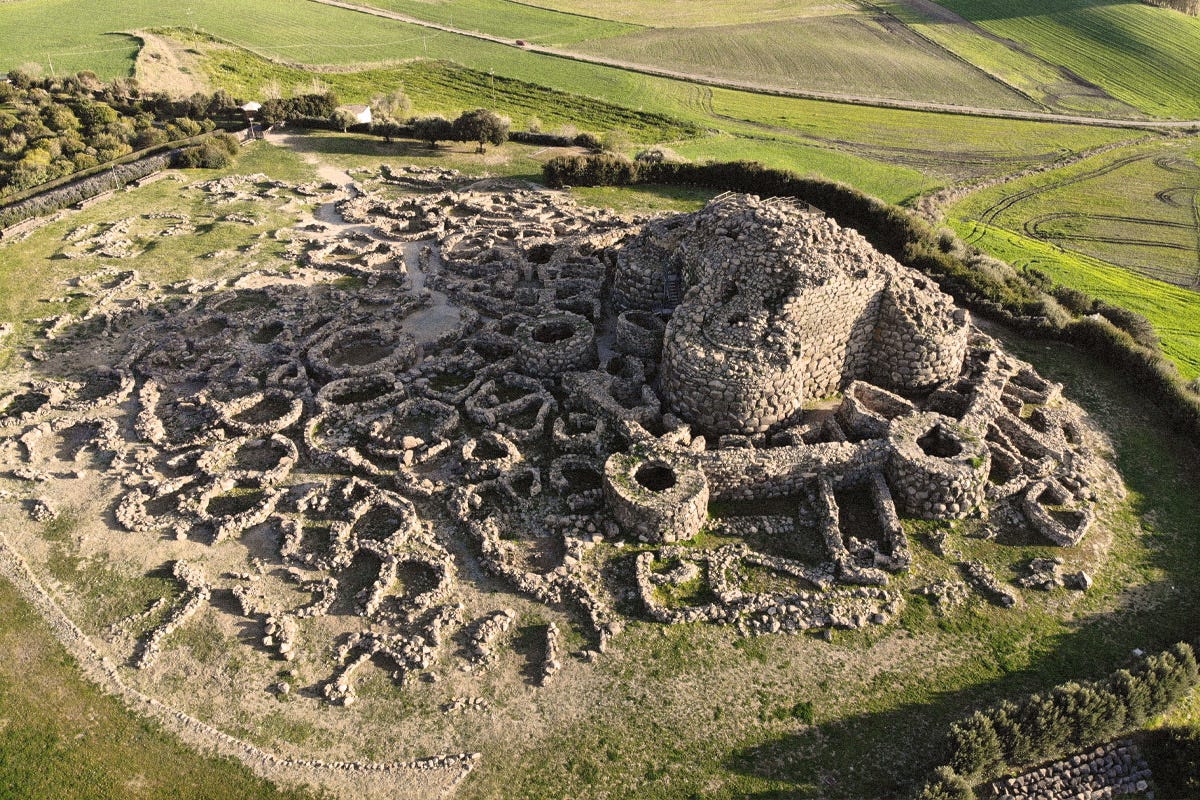
Sardinia offers a complementary narrative. The island is the only Italian region included by Lonely Planet among the 25 global “Best in Travel 2026” destinations. Beyond its celebrated beaches, attention turns to the inland archaeological heritage, such as Su Nuraxi di Barumini, dating back to the second millennium BCE—centuries before the Colosseum. Prehistoric necropolises like the Domus de janas, spiritual routes and rural traditions frame an alternative narrative: less consumption, more immersion.
Slow tourism is not only about trekking. It can mean staying in a village, working remotely in a natural setting, joining local craft workshops, or experiencing gastronomy as a year-round anchor rather than a seasonal attraction. This approach intersects with new audiences: walkers, sports travellers, families and increasingly remote professionals.
The challenge, however, is twofold. First, to ensure that “distributed tourism” does not remain a slogan without infrastructure. Internal mobility, digital connectivity, healthcare access and local training are prerequisites. Second, to preserve authenticity and avoid replicating in inland areas the same distortions that have affected saturated urban centres.
Italy’s coastline and art cities will remain powerful magnets. Yet the country’s competitive edge may lie in complexity: a multi-layered territory where sustainability is not branding but economic method. The question is whether this shift will remain strategic—or become systemic.
One of the most pressing issues is overhauling the transportation systems. In Italy, they are still lacking compared to other Northern European countries. I organize walking tours (and more) in Italy and always have to rely on a transfer system. Many of my clients would gladly take public transportation as well. However, this is the kind of trip my clients are increasingly asking me for: the authentic, real Italy, where encounters are spontaneous and tourists aren’t just seen as cash cows.