When Doors Tell Stories: The Street Art Project Transforming a Small Italian Village
Quando i portoni raccontano il borgo: a Guardiaregia la street art diventa memoria
Nel piccolo paese molisano ai piedi del Matese, vecchi portoni di legno diventano opere di street art e narrano storie di briganti, pastori, emigrazione e tradizioni locali grazie al lavoro di artisti arrivati da tutto il mondo.
Arroccato ai piedi del Monte Mutria, una delle cime più alte del massiccio del Matese, il borgo di Guardiaregia conserva una storia fatta di passaggi, mestieri e memorie che attraversano i secoli. Camminando tra i suoi vicoli in pietra si incontrano tracce di un passato che racconta briganti e pastori, la transumanza e l’emigrazione, le tradizioni gastronomiche, il lavoro degli artigiani della creta, gli abiti popolari e la natura rigogliosa che oggi ospita anche una delle più importanti oasi del WWF.
A raccontare questa storia non sono però soltanto libri o musei. Nel centro storico del paese ci sono custodi molto particolari: i portoni delle case.
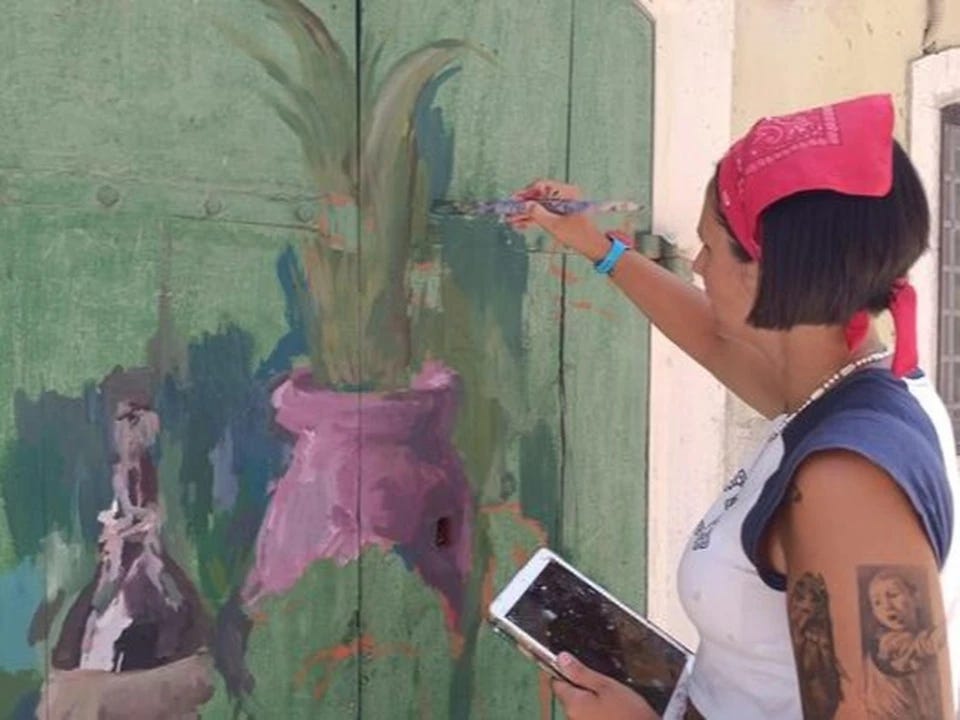
Si tratta di antiche tavole di legno che hanno resistito per oltre mezzo secolo alle intemperie e al tempo. Oggi queste superfici sono diventate tele urbane su cui artisti italiani e internazionali hanno dipinto immagini capaci di intrecciare memoria, identità locale e linguaggi contemporanei.
Nascono così i “Portoni narranti”, un progetto di street art diffusa che ha trasformato Guardiaregia, piccolo comune molisano con poco più di seicento abitanti, in una sorta di galleria d’arte a cielo aperto. Qui le storie del paese non sono esposte su pannelli o cartelli turistici, ma direttamente sugli ingressi delle case, alcune delle quali sono ancora abitate.
Il progetto ha preso forma negli ultimi due anni. Nel 2024 sono state realizzate le prime cinque opere, dando inizio a un percorso artistico che ha attirato nel borgo creativi provenienti da diverse parti d’Italia e del mondo.
Nel corso del 2025, in vari momenti dell’anno, sono arrivati artisti dal Lazio e dalla Campania, ma anche da paesi lontani come Gambia, Argentina, Venezuela e Cile. Ognuno ha interpretato un frammento della storia di Guardiaregia, traducendolo in immagini che dialogano con l’architettura del borgo e con il paesaggio circostante.
Oggi i Portoni narranti sono ventisei e si distribuiscono negli angoli più suggestivi del paese. Il percorso artistico si snoda tra vicoli, cortili e scorci panoramici, trasformando una semplice passeggiata nel centro storico in un viaggio visivo attraverso la memoria collettiva del territorio. Ma il progetto non si fermerà qui: l’obiettivo dichiarato dall’amministrazione comunale è superare i cinquanta portoni dipinti nei prossimi anni.
L’iniziativa è stata ideata e promossa dal Comune di Guardiaregia con il sostegno di due realtà industriali radicate nel territorio, Heidelberg Materials e La Molisana. Il progetto è inoltre sviluppato con la collaborazione dell’associazione Arteteca Molise e con il supporto dell’Osservatorio nazionale sulla creatività urbana InWard.
Secondo Maria Rosaria Grifone, autrice di un libro dedicato all’oasi naturale di Guardiaregia, il significato dell’iniziativa va oltre l’aspetto artistico.
Non si tratta soltanto di street art, ma di un racconto corale capace di mettere in relazione tradizione e contemporaneità, memoria locale e sguardi internazionali, natura e cultura. In questo modo il borgo diventa nuovamente un luogo carico di senso, dove l’arte contribuisce a valorizzare la storia e a renderla accessibile.
Ogni portone dipinto, sottolinea Grifone, rappresenta simbolicamente una porta aperta sulla storia del paese e sulle sue radici. Radici che continuano a legare le persone alla propria terra, anche in un tempo in cui molti sono costretti a cercare altrove nuove opportunità.
L’obiettivo del progetto è infatti anche quello di rafforzare il valore culturale di un territorio che, come molte aree interne italiane, deve fare i conti con il fenomeno dello spopolamento. In questi luoghi però sopravvive un patrimonio straordinario fatto di antiche abitazioni, paesaggi selvaggi e secoli di storie e leggende.
Attraverso i colori della street art, Guardiaregia prova oggi a raccontare tutto questo in modo nuovo: trasformando semplici portoni di legno in pagine visive della propria storia.
In the small Molise village at the foot of the Matese mountains, old wooden doors have become canvases for international street artists, telling stories of brigands, shepherds, migration and local traditions.
Perched at the foot of Monte Mutria, one of the highest peaks of the Matese mountain range, the village of Guardiaregia preserves a history shaped by centuries of movement, work and memory. Walking through its narrow stone streets reveals traces of a past marked by brigands and shepherds, seasonal transhumance, waves of emigration, traditional cuisine, clay craftsmanship, folk clothing and the lush surrounding nature that today hosts a WWF oasis.
Yet in Guardiaregia, these stories are not told only through books or museums. In the historic center of the village there are unusual storytellers: the doors of the houses themselves.
These are ancient wooden doors that have survived more than half a century of weather and time. Today, those surfaces have become urban canvases on which Italian and international street artists have painted images that blend memory, local identity and contemporary artistic language.
The result is the project known as “Portoni Narranti” — literally “Storytelling Doors” — a form of distributed street art that has turned Guardiaregia, a Molise village of just over six hundred residents, into an open-air art gallery. Here, the stories of the community are not displayed on information panels but painted directly onto the entrances of old houses, some of which are still inhabited.
The project has taken shape over the last two years. In 2024 the first five artworks were created, launching an initiative that soon began attracting artists from across Italy and abroad.
Throughout 2025, creatives arrived at different times of the year from Lazio and Campania, but also from countries such as Gambia, Argentina, Venezuela and Chile. Each artist interpreted a different aspect of Guardiaregia’s identity, translating fragments of local history into images that interact with the architecture of the village and the surrounding landscape.
Today there are 26 storytelling doors scattered throughout the most picturesque corners of the village. The artworks form a path that winds through alleys, courtyards and scenic viewpoints, turning an ordinary walk through the historic center into a visual journey across the community’s collective memory.
The project, however, is still evolving. According to the mayor, the goal is to reach more than fifty painted doors in the coming years.
The initiative was conceived and promoted by the municipal administration of Guardiaregia with the support of two major local companies, Heidelberg Materials and La Molisana. It is also developed with the participation of the Arteteca Molise association and with the support of the National Observatory on Urban Creativity, InWard.
For Maria Rosaria Grifone, author of a book dedicated to the natural oasis of Guardiaregia, the project carries a deeper meaning beyond its artistic dimension.
It is not merely a street art initiative, she explains, but a collective narrative that intertwines tradition and modernity, local memory and international perspectives, nature and culture.
Through projects like this, small villages can rediscover their sense of place and identity. Art and culture create new reasons to visit them, live in them and care about them.
Each painted door becomes a symbolic gateway into the history of the village and into the roots that still connect people to their land, even in an era when many feel pushed to leave.
At the same time, the project aims to enrich the cultural value of an area that — like many internal regions of Italy — faces the challenge of depopulation. Yet within these landscapes survives an extraordinary heritage of ancient houses, wild panoramas and centuries of stories and legends.
Through the colors of street art, Guardiaregia is now telling that story in a new way — turning simple wooden doors into living pages of its past.


