


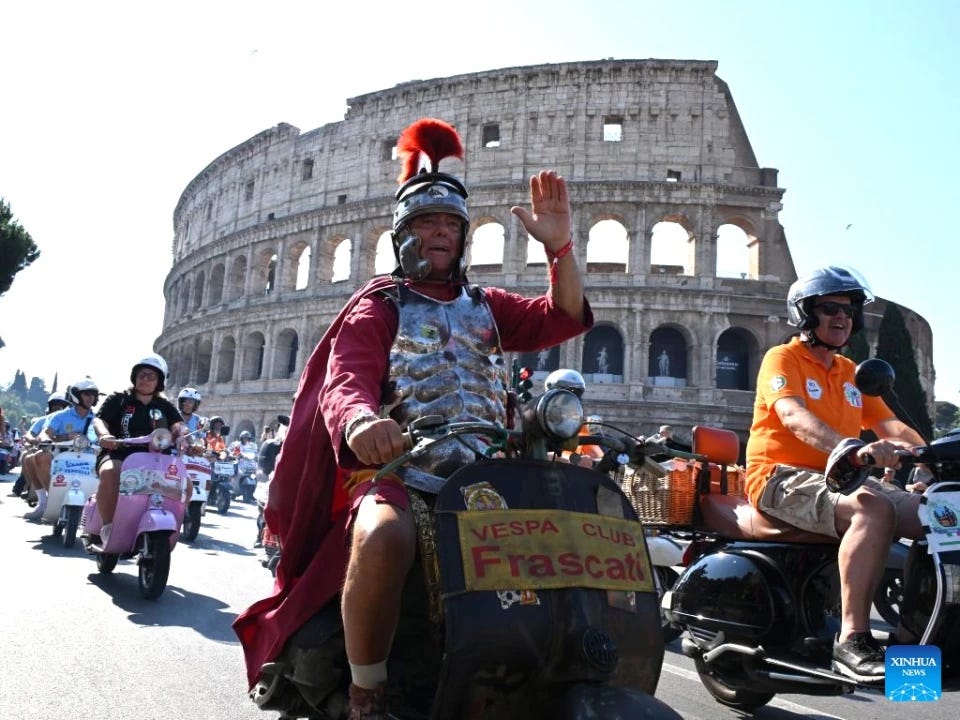
Per gli 80 anni della Vespa, oltre diecimila scooter hanno attraversato Roma tra Colosseo e Foro Romano, ricordandoci che certi cliché italiani, per quanto abusati, restano veri perché sanno ancora muoversi, sorridere e fare rumore nel modo giusto.
Ci scusiamo in anticipo per il cliché, perché sappiamo benissimo che Roma, il Colosseo, la Vespa, la libertà, la dolce vita e quell’idea un po’ cinematografica dell’Italia che profuma di estate, sampietrini e motori piccoli ma ostinatamente felici sono materiale pericolosissimo, da cartolina, da brochure turistica, da poster appeso in un bar di San Francisco da qualcuno che pronuncia “espresso” come se fosse una password segreta. Eppure, ogni tanto, il cliché ha ragione. Anzi, ogni tanto arriva in massa, con oltre diecimila Vespe, attraversa il centro storico di Roma, passa davanti al Colosseo e al Foro Romano, e ci costringe ad ammettere che alcune immagini resistono non perché siamo pigri, ma perché continuano a funzionare.
Per celebrare gli 80 anni della Vespa, Roma si è trasformata per quattro giorni in una capitale mondiale del due ruote gentile, con appassionati arrivati da tutta Europa, dagli Stati Uniti, dall’Australia, dalle Filippine e da molti altri luoghi in cui, evidentemente, qualcuno ha deciso che la forma più raffinata di nostalgia italiana non è una supercar parcheggiata davanti a un hotel a cinque stelle, ma uno scooter che sembra ancora capace di portarti al mercato, al mare, al primo appuntamento o dentro un film del dopoguerra senza chiedere troppi permessi.
Ed è qui che la Vespa continua a battere quasi tutti sul piano simbolico. Ferrari è desiderio, Ducati è adrenalina, Lamborghini è teatro, ma la Vespa è una cosa più rara: è un oggetto popolare diventato mito senza smettere di sembrare accessibile. Non nasce per impressionare, nasce per muovere un Paese che nel 1946 aveva bisogno di rimettersi in strada, fisicamente e moralmente. Era pratica, economica, urbana, intelligente; poi, siccome l’Italia quando fa bene le cose riesce talvolta a inciampare nell’eleganza senza neppure fingere modestia, è diventata anche bella.
La Vespa è uno dei grandi paradossi del Made in Italy: industriale ma romantica, quotidiana ma iconica, semplice ma riconoscibile al primo sguardo. Ha attraversato ottant’anni di mode, film, pubblicità, turismo, adolescenze, vacanze e ritorni di fiamma vintage senza essere ridotta a un pezzo da museo. Certo, il cinema l’ha aiutata, e Roman Holiday le ha consegnato una patente internazionale di fascino che molti brand pagherebbero volentieri in contanti e dignità. Ma la Vespa è sopravvissuta al proprio mito perché non è rimasta ferma dentro quel mito: ha continuato a circolare, a essere comprata, usata, modificata, restaurata, fotografata, amata e, soprattutto, guidata.
La scena romana degli 80 anni racconta quindi qualcosa che va oltre la festa di marca. Racconta una forma di italianità che non ha bisogno di spiegarsi con lunghi manifesti identitari, perché arriva prima attraverso l’uso, il suono, la postura e l’emozione. La Vespa non è soltanto design; è design che entra nella vita quotidiana. Non è soltanto heritage; è heritage che ancora parcheggia, riparte, sbuffa, supera il traffico e fa sorridere i passanti. Non è soltanto nostalgia; è nostalgia con il casco in mano e una destinazione molto concreta.
E allora sì, è tutto molto prevedibile: Roma, Vespa, Colosseo, libertà, stile italiano. Scusate ancora. Però quando oltre diecimila persone decidono di attraversare la Città Eterna per celebrare uno scooter nato ottant’anni fa e il risultato non sembra una rievocazione polverosa, ma una festa viva, rumorosa, affettuosa e internazionale, forse il problema non è che il cliché sia troppo facile. Forse il punto è che alcuni cliché italiani, ogni tanto, sono semplicemente troppo veri per essere ignorati.

For Vespa’s 80th anniversary, more than ten thousand scooters rolled through Rome, reminding the world that some Italian clichés are not lazy at all: they survive because they still move beautifully.
Let us apologise in advance for the cliché, because we are perfectly aware that Rome, the Colosseum, the Vespa, freedom, summer, cobblestones and that slightly over-polished idea of Italy which seems permanently lit by late afternoon sunshine are all dangerously close to postcard territory. This is the sort of material that normally ends up in travel brochures, airport adverts and framed prints in cafés where someone, somewhere, is still explaining that they once spent three unforgettable days in Tuscany. And yet, every now and then, the cliché wins. It wins because it arrives on two wheels, in extraordinary numbers, making a small, cheerful, unmistakable noise, and suddenly even the most exhausted observer of Italian symbolism has to admit that the image still works.
For Vespa’s 80th anniversary, Rome became, for four days, the world capital of the elegant little scooter, with more than ten thousand Vespas moving through the historic centre, passing the Colosseum and the Roman Forum, and turning ordinary traffic into something that looked suspiciously like collective affection. Riders came from across Europe, from the United States, from Australia, from the Philippines and from many other places where, clearly, someone has decided that the most persuasive form of Italian nostalgia is not a red supercar outside a luxury hotel, but a scooter that still looks as if it could take you to the market, to the seaside, to a first date or straight into a post-war film without asking for permission.
This is why Vespa remains such a powerful object. Ferrari is desire, Ducati is adrenaline, Lamborghini is theatre, but Vespa is something rarer: a popular product that became a myth without losing its democratic face. It was not created to intimidate or impress. It was created in 1946 to help a damaged country move again, practically and emotionally. It was affordable, clever, urban and useful. Then, because Italy at its best has a habit of accidentally turning function into elegance, it also became beautiful.
Vespa is one of the great paradoxes of Made in Italy: industrial but romantic, everyday but iconic, simple but instantly recognisable. Across eighty years it has moved through films, advertisements, family albums, holidays, teenage memories, vintage revivals and global tourism without being trapped entirely inside a museum cabinet. Yes, cinema helped. Of course it did. Roman Holiday gave the scooter a kind of international glamour that many brands would happily buy with both money and dignity. But Vespa survived its own mythology because it did not remain frozen inside it. It kept moving. It kept being bought, ridden, restored, photographed, customised, loved and used.
The Rome celebration therefore tells us something larger than the story of a brand anniversary. It says something about a kind of Italian identity that does not need to be over-explained, because it reaches people first through shape, sound, movement and feeling. Vespa is not merely design; it is design entering daily life. It is not merely heritage; it is heritage that still parks badly, restarts noisily, cuts through traffic and makes strangers smile. It is not merely nostalgia; it is nostalgia wearing a helmet and going somewhere.
So yes, Rome, Vespa, Colosseum, freedom, Italian style: we know, we know. Terribly predictable. Almost criminally easy. But when more than ten thousand people gather in the Eternal City to celebrate a scooter born eighty years ago, and the result does not feel like a dusty commemoration but like a living, noisy, affectionate international party, perhaps the problem is not that the cliché is too obvious. Perhaps the point is that some Italian clichés are still true enough to deserve the road.
Anything that still stimulates authentic human emotion is worth celebrating... actually it must be celebrated.