
When Tourism Devours Itself (and Cities Turn into Stage Sets)
Quando il turismo divora se stesso (e le città diventano scenografie)
Ripropongo quasi senza commento un articolo di Greg Dickinson, perché a volte è più utile fermarsi, leggere e farsi una domanda semplice, invece di aggiungere subito un’opinione.
Pagare due euro per lanciare una monetina nella Fontana di Trevi non è solo una curiosità turistica: è il segnale di un modello che scricchiola. A Roma, Venezia, Parigi e in molte altre città europee, il turismo di massa non viene realmente regolato, ma progressivamente “prezzato”. Non per ridurne l’impatto, ma per renderlo economicamente più tollerabile.
Il punto centrale dell’articolo è netto: l’Europa non sta affrontando il problema dell’overtourism, lo sta monetizzando. Le folle non diminuiscono, i luoghi si deteriorano, e in risposta si introducono ticket simbolici, contributi giornalieri, eco-tasse che difficilmente cambiano i comportamenti. Servono più a dimostrare che “qualcosa si sta facendo” che a proteggere davvero città e comunità.
La scena descritta alla Fontana di Trevi è emblematica: anche durante i lavori di restauro, senza acqua e senza spettacolo, le persone continuano ad ammassarsi e a lanciare monetine in una vasca provvisoria. Lo stesso accade a Venezia, dove il contributo per i visitatori giornalieri non ha alleggerito la pressione, o a Parigi, dove il degrado intorno ai luoghi simbolo viene ormai considerato parte del “contratto” tra città e turismo.
Spesso la responsabilità viene attribuita ai visitatori: selfie, consumo rapido, comportamenti superficiali. Ma l’articolo ribalta il punto di vista. Il problema non è solo chi arriva, ma chi governa. Politiche che preferiscono l’incasso immediato alla tutela di lungo periodo. Città trattate come attrazioni, non come spazi abitati.
Esistono eccezioni: Dubrovnik ha limitato l’accesso delle crociere, Barcellona ha deciso di eliminare progressivamente gli affitti brevi per affrontare la crisi abitativa. Ma sono ancora casi isolati in un contesto che continua a evitare la domanda centrale: quante persone possono davvero sostenere questi luoghi, senza snaturarsi?
La riflessione finale resta sospesa, volutamente. Se il turismo di massa continua a consumare ciò che rende uniche le città europee, forse il problema non è trovare nuove monetine da far lanciare, ma avere il coraggio di ripensare tutto il modello.
I am reposting, almost without comment, an article by Greg Dickinson, because sometimes it is more useful to pause, read carefully, and ask a question than to immediately add another opinion.
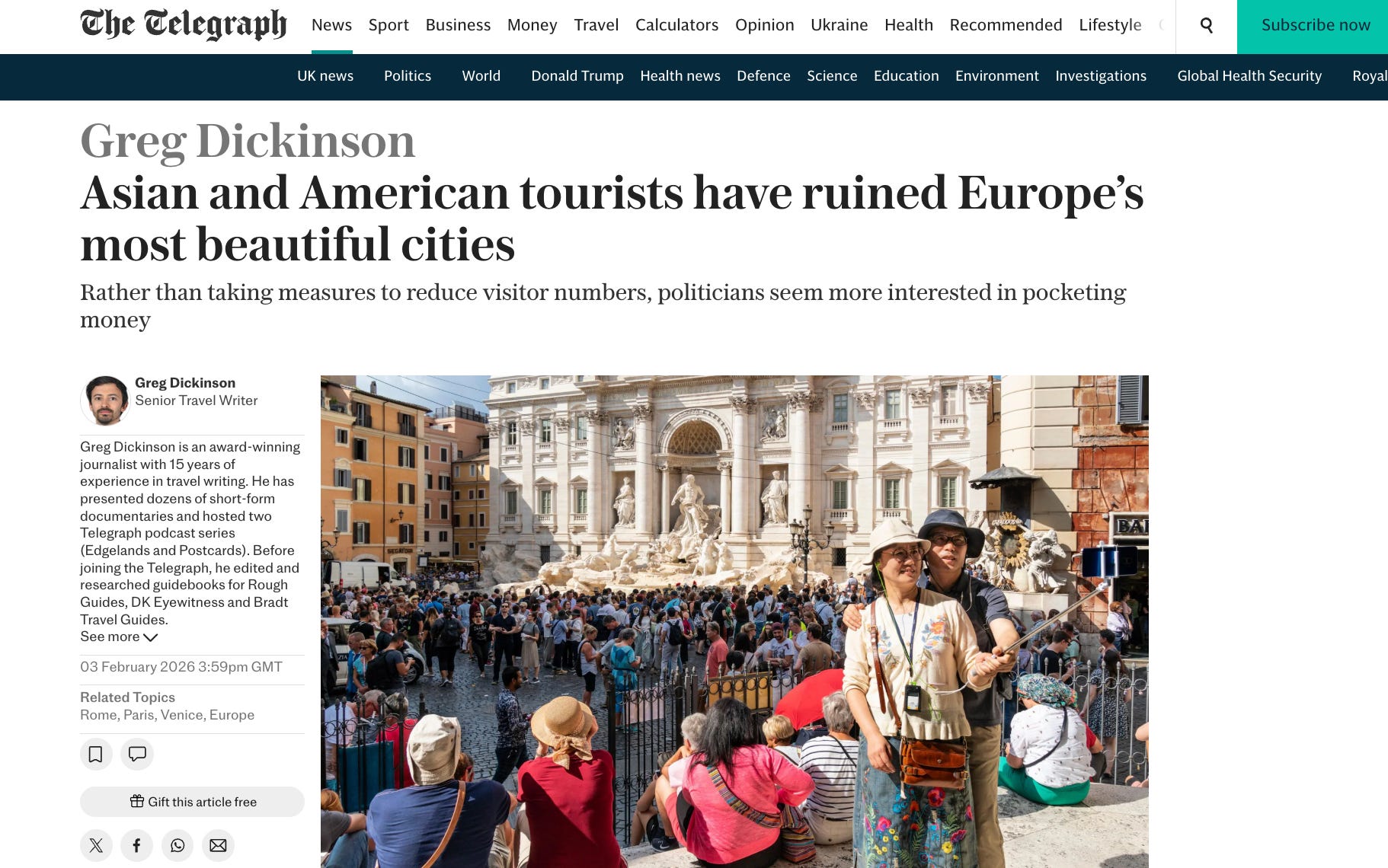
Paying two euros to toss a coin into the Trevi Fountain is not just a quirky travel anecdote. It is a symbol of a deeper problem. In cities like Rome, Venice, and Paris, mass tourism is no longer being managed—it is being monetised.
Dickinson’s argument is disarmingly simple: across Europe, policymakers are not seriously trying to reduce visitor numbers. Instead, they are finding new ways to charge for overcrowding. Entry fees, visitor contributions, eco-taxes and symbolic levies multiply, while the crowds remain exactly where they were. The money flows in, but the pressure on cities does not ease.
The Trevi Fountain scene described in the article is emblematic. Even when drained for restoration works, stripped of water and spectacle, tourists continued to gather in frenetic numbers, tossing coins into a temporary plastic basin. The ritual survived the monument itself. The same pattern repeats in Venice, where a modest day-tripper fee has done little to thin the crowds, and in Paris, where the areas around iconic landmarks increasingly resemble unmanaged stages rather than lived-in neighbourhoods.
Public frustration is often directed at tourists themselves: selfie sticks, superficial consumption, insensitive behaviour. Yet Dickinson shifts the focus upward. The real issue is political inertia. Charging visitors is easier than making unpopular decisions about limits, access, housing, or economic dependency. Cities become revenue-generating backdrops, while residents adapt—or leave.
There are notable exceptions. Dubrovnik has capped cruise arrivals to protect its historic core. Barcelona has committed to removing short-term rentals to address its housing crisis. But these remain isolated cases in a broader European landscape that still avoids the central question.
How many visitors can a city truly sustain without losing its identity? And what happens when preservation is replaced by pricing, and protection by monetisation?
Mass tourism, Dickinson suggests, behaves like calcium on limestone: it accumulates slowly, invisibly, until the very substance of what we came to admire begins to erode. At that point, charging a little more at the entrance may be the least effective response of all.
The question, left deliberately open, is whether Europe is willing to rethink its tourism model—or whether it will continue to sell access to cities that are gradually turning into scenery.


